Unity of invention is a cardinal principle in patent law. It ensures each patent application is filed for a single, specific invention or a group of inventions that are so inter-linked as to form one, shared inventive concept. This foundational requirement prevents applicants from claiming a multitude of distinct, unrelated inventions in a single application.
At the heart of this principle lies the notion of a single “inventive concept.” It essentially means that the invention must incorporate ‘special technical features’ that are shared among the claims and define a contribution over prior art. Such technical features must contribute to the novelty and inventive step of the invention.
In general, a single patent application can claim: (i) a product, its uses and manufacturing process; or, (ii) a process and the apparatus designed therefor. For instance, a patent application may claim a pharmaceutical composition containing a novel chemical compound, along with a method of preparing that compound. These claims are considered unified since they revolve around the same inventive contribution—the new chemical compound purportedly invented.
However, unity is absent when claims are unrelated. For example, a patent application, claiming both a pharmaceutical compound and a mechanical apparatus without any technical relationship or inter-connectedness between the two claims, clearly violates the requirement.
The fundamental concepts of patent law find expression in international and domestic legal frameworks. Under Article 3(4)(iii) of the Patent Cooperation Treaty (PCT) and Rule 13 of the Regulations framed thereunder, every international patent application must pertain to a single invention or to a group of inventions linked by a single general inventive concept.
Therefore, patent laws of many countries mandate this principle.
The determination of whether a group of inventions is so linked as to form a single general inventive concept shall be made without regard to whether the inventions are claimed in: (i) separate claims, or, (ii) as alternatives within a single claim.
If an application features multiple unrelated inventions, the patent office raises a "lack of unity" objection. This is not fatal to the grant of patent; the applicant can opt to pursue any one invention and file divisional applications for the others.
When unity of invention is lacking, the applicant can either amend claims, or alternatively, file divisional applications for each distinct invention. In international applications under the PCT, the applicant may also be required to pay additional search fees.
The principle facilitates the staking of coherent claims in patent applications. It ensures that patents are granted only for clear and unambiguous inventions; thus, it avoids potential disputes too. Besides, it prevents applicants from circumventing fee structures and attempting to protect multiple inventions in a single application.
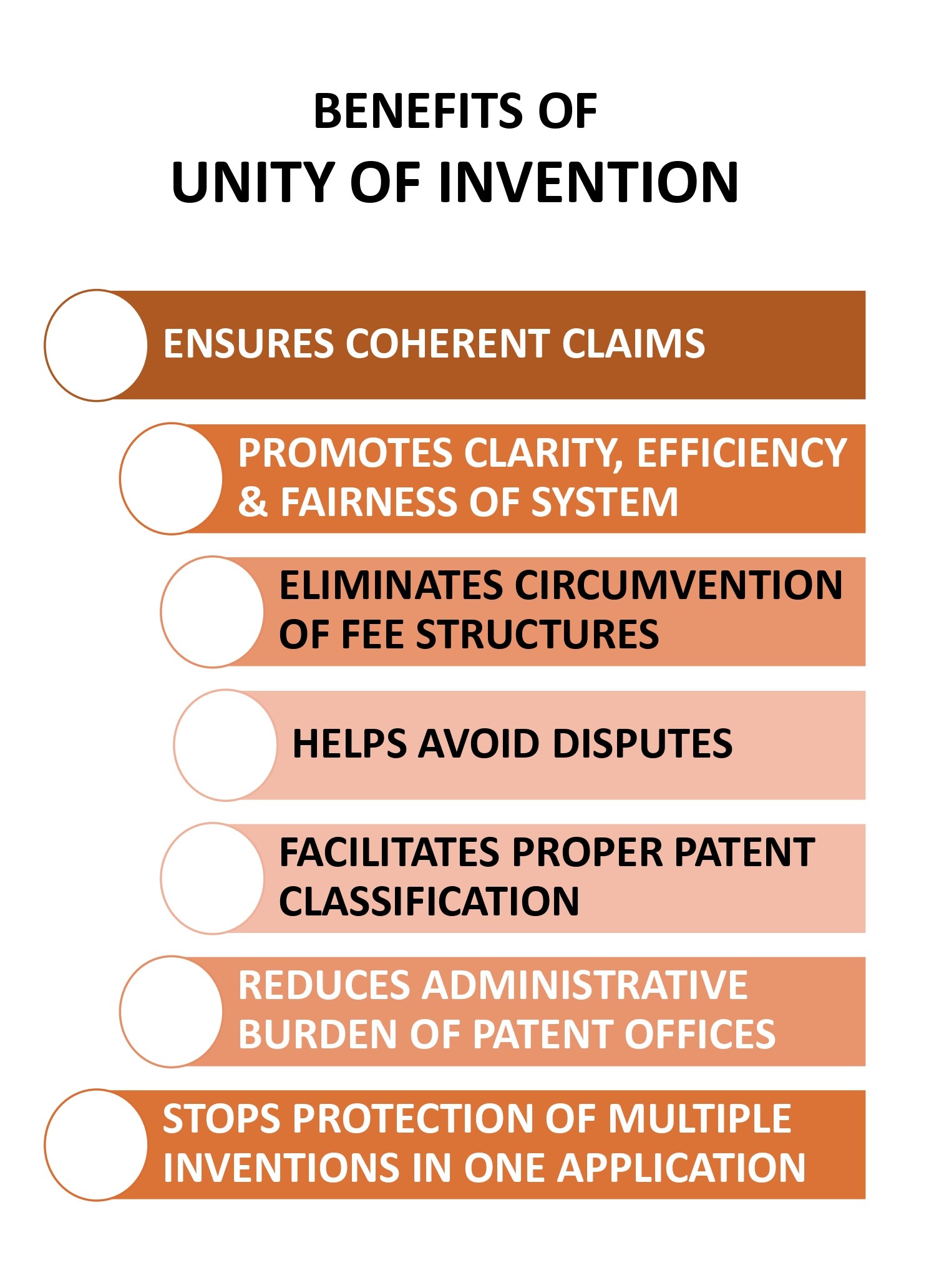
Patent offices too can examine applications more efficiently. The requirement simplifies patent classification challenges; facilitates appropriate fee receipts; and reduces administrative burden. Thus, unity of invention, as a critical principle for patent law, promotes clarity, efficiency, and fairness in the patent system without sacrificing the interests of applicants and patent offices.
At BLAZE VENTURES, we have elaborate processes and qualified professionals for helping inventors and enterprises with global protection of IP rights for their ideas, inventions and innovations.