Utility model patents, often referred to as "petty patents", “short-term patents”, "innovation patents", and “second-tier patents”, are a class of intellectual property assets. Utility models are defined in some jurisdictions (such as, China) as any new technical solution “proposed for the shape, the structure, or their combination, of a product, which is fit for practical use.”
While resembling ordinary patents, these generally offer protection for a shorter duration through a simpler registration process. Innovation patents are a faster, cheaper, and less stringent alternative to standard patents.
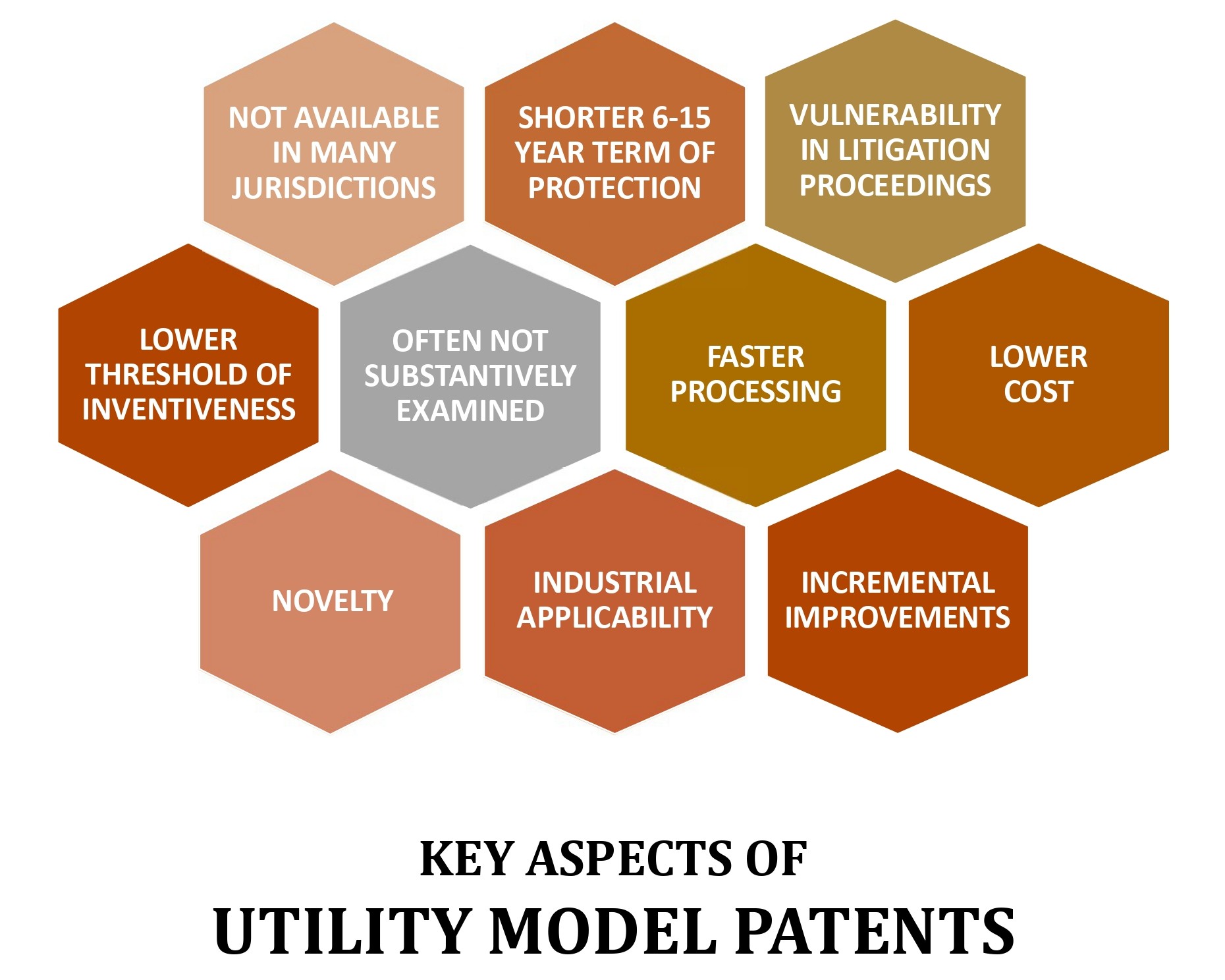
This form of protection in not available in many jurisdictions, like US, UK and Canada. In fact, in the US, the term ‘utility patents’ refers to regular, high-level patents, not the ‘second-tier patents’ described herein. However, it is widely used in other countries, such as, the People’s Republic of China, Germany, Japan, and South Korea.
The main object of utility model patents is to encourage innovative improvements. Many innovations do not represent revolutionary breakthroughs, but rather practical changes, incremental modifications and functional improvements to existing tools, devices, or other articles.
Such innovative ideas may not always satisfy the strict patentability criterion of “inventive-step” applicable to the grant of regular patents; yet, they still deserve legal recognition and economic reward. They are specifically useful for protecting innovations with short commercial lifespans.
That then is the rationale for the less stringent utility model protection.
The pre-requisites for the grant of utility model patents vary by jurisdiction; generally, they include: novelty and industrial applicability (or, usefulness), besides some element of inventiveness. However, the threshold of inventive-step is typically lower than that for standard patents.
In many countries, applications are not substantively examined before grant, meaning registration may be faster—sometimes within months. This allows inventors to secure rights quickly and enter the market with greater confidence. Therefore, utility model patents are ideal for minor or incremental improvements.
Another distinguishing feature is the shorter term of protection. While exclusive rights over regular patents generally last twenty years from the filing date, rights over utility model patents subsist for between six and fifteen years depending on the applicable national law. Filing and maintenance fees are also lower too.
It is pertinent to note that this category of patents is essentially for protecting IP rights over improvements to physical products and articles; and, rarely for process enhancements. Nevertheless, utility models are more vulnerable to challenges in infringement litigation or invalidation proceedings.
Concluding Remarks
From an economic perspective, utility model patents are especially valuable in developing and industrializing economies because they promote local innovative ideas, design changes and manufacturing enhancements. They allow domestic firms to protect incremental innovations; contribute significantly to entrepreneurial growth; and, gradually build technological capability.
Thus, utility model patents serve as a flexible and cost-effective alternative to ordinary patents. They help inventors, start-ups, and small businesses protect their practical innovations quickly and at lower cost.
At BLAZE VENTURES, we have elaborate processes and qualified professionals to help inventors and enterprises effectively create, protect and monetise IP rights over their incremental innovations and improvements.