Publication is a vital, mandatory phase in the patenting process. It signifies the transition from a confidentially filed patent application to a publicly accessible legal document. It makes the details of the invention public, which then makes it a part of prior art and can be used for preventing others from patenting similar technology. It balances the inventor’s rights vis-a-vis that of public interest in full technological disclosure.
However, in some jurisdictions, such as, the USA, the patent system offers applicants the option of keeping their patent application confidential until the final grant of patent. Under standard U.S. patent practice, applications are published automatically eighteen months after the priority date by the patent office.
The publication system was introduced to align US patent law with international norms. Patent applications are published by default, which gives the general public notice of pending patent rights.
However, it was soon realised that some inventors may prefer secrecy. The law permits applicants to file a Non-Publication Request (NPR), which prevents such public disclosure. Competitors do not get access to and cannot review the inventor’s application. Hence, neither the claims therein can be studied; nor the technical disclosures assessed unless and until a patent is granted.
Therefore, the NPR is a formal, upfront request that an applicant to maintain confidentiality over the invention, and all associated application documents, until the patent is actually granted. Hence, filing of NPR is a strategic decision taken to keep the technical details of the invention private for gaining competitive advantage and ensure business rivals are not tipped off about innovative ideas.
The non-publication request (NPR) must be submitted at the time of initial filing of the patent application. The applicant must certify though that no application will be filed in foreign countries that mandate 18-month publication. The NPR can be rescinded at any time though.
Non-publication requests also involve limitations. Under US laws, if the NPR is submitted and the applicant later files a foreign application for the same invention, then the USPTO must be intimated about such foreign filing, failing which the U.S. application will be considered abandoned.
The principal advantage of a non-publication request is the preservation of trade secrecy during prosecution. It avoids alerting rivals on new product developments. This can be strategically useful where the technology has commercial value but uncertain patent prospects.
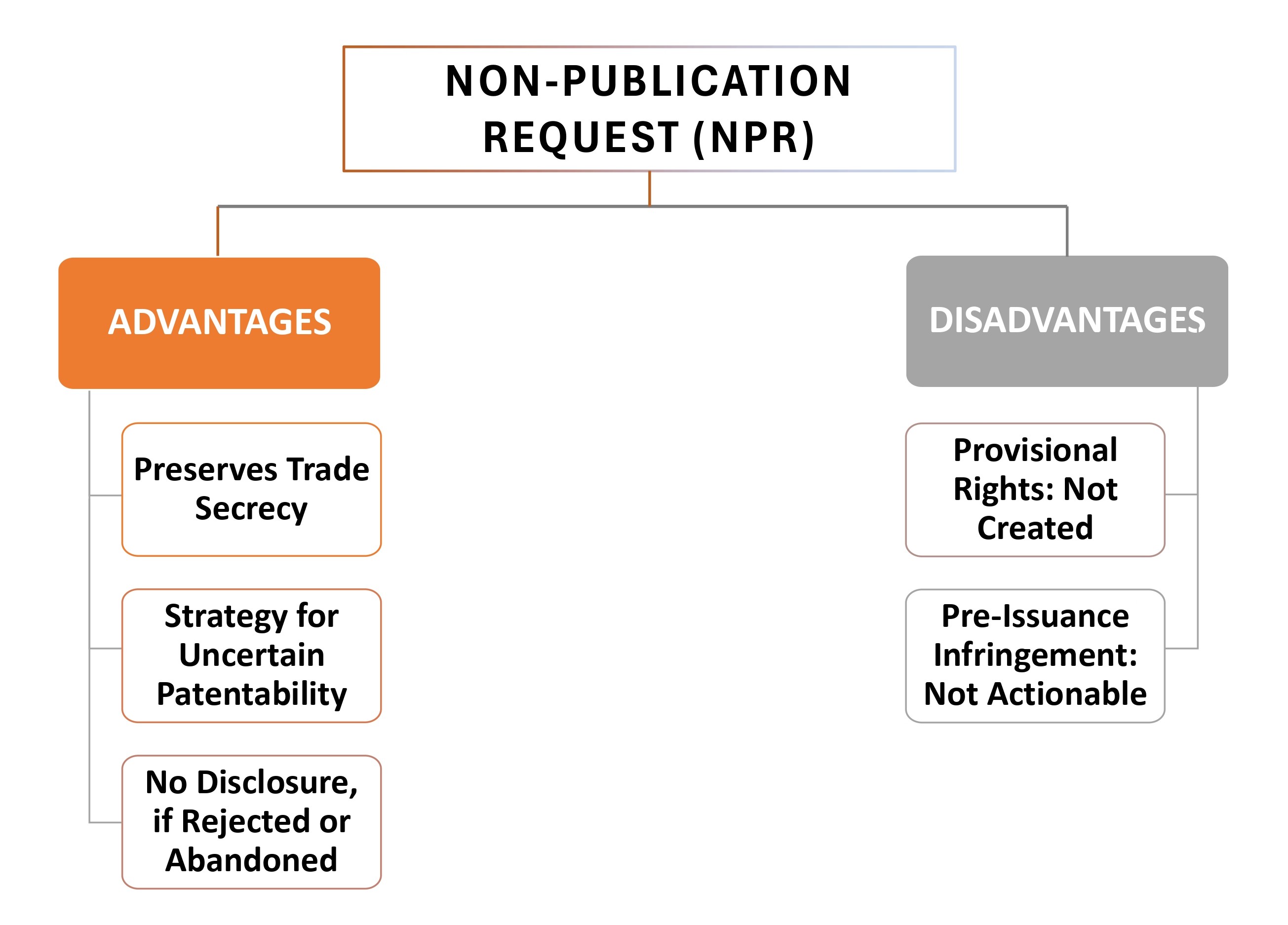
If the patent application is eventually rejected or abandoned, the invention disclosures are never made public through the patent system. However, if the patent is granted, the invention details get revealed.
Another benefit is competitive flexibility. Startups, inventors and small enterprises usually value the opportunity to defer disclosure until there is certainty on the grant of patent and the vesting of enforceable rights.
It must be noted though that unpublished applications do not create provisional rights based on pre-grant publication― this means that lawsuits seeking damages for pre-issuance infringements may not be sustainable.
In conclusion, the non-publication request (NPR) is an important strategic tool in U.S. patent law. It balances the public disclosure goals of the patent system with the inventor’s interest in confidentiality.
At BLAZE VENTURES, we have elaborate processes and qualified professionals to help inventors and enterprises effectively create, protect and monetise IP rights over their ideas, inventions and innovations.