A Divisional Patent Application is essentially a "divided out" application stemming from a parent application filed earlier. Such carving out is done to protect distinctly separate inventions disclosed in the original filing.
A divisional application is generally filed when the original (parent) application is deemed to incorporate multiple inventions, which is violative of the concept of ‘unity of invention’, which is a stipulation of patent laws in most jurisdictions. Hence, it is mandatory for a patent application to pertain either to one invention only, or, to a group of inventions that form a single inventive concept.
The primary purpose of divisional applications is enabling applicants to secure protection for multiple inventions disclosed in a single filing. Although it is treated as a separate application for examination purposes, a divisional application must not disclose any new subject matter vis-a-vis that in the parent application. Further, claims must be fully supported by the original specification.
For instance, if a novel product and a unique manufacturing method thereof are described in an application, the patent office may insist that these two be split into separate applications. The applicant can then pursue protection for each invention independently through divisional filings.
Divisional patents serve a strategic purpose too. Despite being filed later, the application retains the parent application’s priority date (or, filing date). This is a vital benefit; it ensures that the inventions disclosed in the original application are protected from intervening prior art. It helps circumvent "restriction requirements" or other similar objections in various jurisdictions without losing the priority date for the new application.
Divisional applications are often filed to refine or widen the scope of protection; to pursue different claim strategies; or, to keep aspects of an invention pending for longer durations. The flexibility afforded is specifically vital in domains, such as, technology and pharmaceuticals, where innovations evolve over time; competitive factors are dynamic; and, market scenarios are always fluid.
At any time prior to the grant of the patent, if either an applicant so desires or the patent office raises the objection that the claims in the application relate to multiple distinct inventions, then further divisional application(s) may be filed. The divisional filing must be completed during the pendency of the parent application, that is, prior to the grant, withdrawal or abandonment of the original patent application.
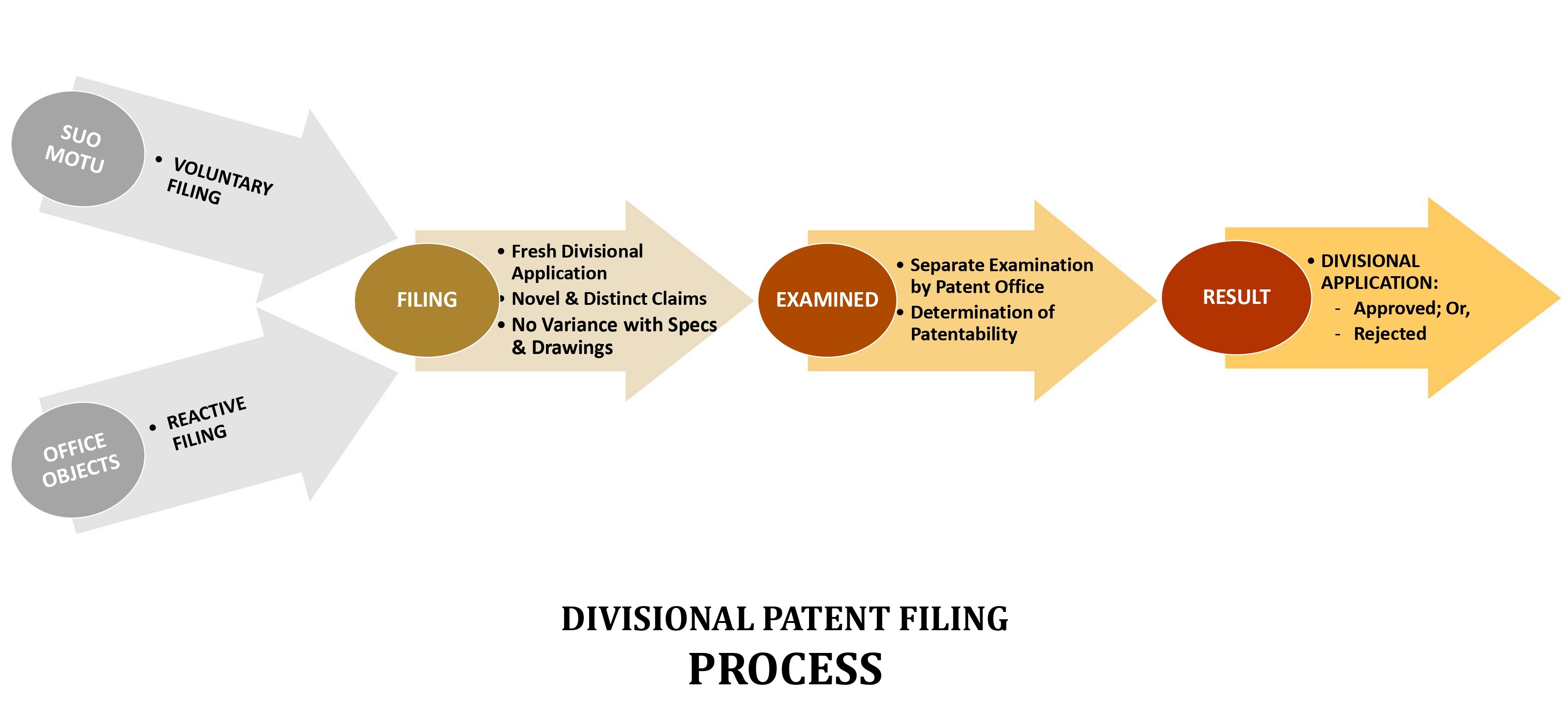
In general, when a plurality of distinctive inventions is identified in the parent application, the patent examiner generally requires a restriction, which is a formal direction for the applicant to elect one invention for the parent application. Such a conclusion of the examiner makes it mandatory for the application to be split, or divided suitably.
The applicant thereafter files fresh divisional applications with novel and distinct claims for the other inventions, but without any alteration to the specifications and drawings disclosed in the parent application. Such divisional applications are examined separately.
Applicants have the option of voluntarily filing divisional applications even with no explicit objection of the patent office on the lack of unity of invention. The divisional though must relate to the invention detailed in the first filing. Jurisprudence is split on whether a divisional is to be carved out only from the claims of the parent application or from the disclosed specifications therein.
There are limitations and disadvantages associated with divisional patents. It is improperly used frequently to extend patent monopolies unfairly, which may attract scrutiny under the doctrine of “Double Patenting”.
Patent offices and courts may reject divisional claims that are not sufficiently disparate from those already granted. Further, divisional applications add to the cost of patent prosecution, due to additional attorney fees, filing expenses, maintenance costs, etc.
In conclusion, divisional filings are a vital mechanism that ensures compliance with the unity of invention requirement of patent law. They usher in strategic fairness and procedural flexibility into the legal framework governing patents.
At BLAZE VENTURES, we have elaborate processes and qualified professionals for helping inventors and enterprises with comprehensive protection of IP rights over their ideas, inventions and innovations.