The landmark pronouncement of Japan’s Intellectual Property High Court in Matsushita v. Justsystem (2005)[1]—popularly referred to as the “Ichitaro” Case)—fundamentally shaped how Japanese courts treat patentability of computer programs.
The dispute involved Japan’s leading word-processing software developer Justsystem, and electronics giant, Matsushita Electric Industrial Co., Ltd., now renamed as Panasonic Corporation. The pivotal software patent infringement case was ultimately decided by the Intellectual Property High Court's first Grand Panel in 2005. The dispute centered on software functionality and indirect patent infringement.
Matsushita had owned a large international portfolio of software patents, which included Japanese Patent No.2,803,236 (‘the ‘236 patent’), an "information processing device and information processing method" patent related to a pop-up function for Japanese language input assistance or help. The click-and-drag feature therein particularly was distinguished from prior art help modes. That specific patent enhanced the efficiency of text conversion and editing.
Justsystem Corporation, a developer and marketer of popular word processing software "Ichitaro" and graphics software "Hanako," which included a similar help feature. Hence, Matsushita sought a preliminary injunction in the Tokyo District Court against Justsystem’s software suite.
Matsushita alleged that functions built into the Ichitaro software infringed its patented technical method. At first instance, the court favoured the patentee by granting a preliminary injunction and temporarily halting distribution of the software.
By interpreting ‘icon’ broadly, the court ruled that the Justsystem infringing products’ Help & Print Buttons were icons and hence an infringement of Japan’s Patent Law § 101, which proscribes indirect infringement. ‘Induced infringement’ was added in 2002 and first applied in the Justsystem case.

Seeking invalidation, Justsystem argued that the Matsushita claims lacked an inventive step based upon three prior art references, which the district court rejected without any elaborate reasoning.
Thus, the trial court ruled that Justsystem was liable for indirect infringement, because users installing the software on personal computers created a product (the PC with the software)that met every feature of the patent-in-suit invention. This was the first major injunction against mass-market packaged software in Japan based purely on a software-related patent.
Justsystem appealed to the Intellectual Property High Court (IPHC), which proceeded to hear the matter en banc, with a bench of five judges convened therefor. The core legal questions before the IPHC in this unprecedented case pertained to the: (a) interpretation of a computer program as falling within the scope of a ‘product’, not just ‘method’ patent; and, (b) indirect infringement arising when software is distributed who ultimately execute the patented process.
The court adopted a strict and technical approach to claim construction. It held that the allegedly infringing software did not perform every essential technical feature of the patented claim as required. The mere replication of functional results by executing the program is insufficient, if the patented technical structure is not reproduced.
The court clarified too that software program distribution alone does not automatically establish direct infringement, unless statutory elements of technical equivalence and implementation are fully satisfied.
Justsystem also argued that the ‘236 patent of Matsushita was invalid due to the prior art references, which the trial court had not been considered because of their late submission. The argument was upheld because of the fast-paced disposal by the district court. Further, in view of the prior art references, the IPHC observed that the claims were unenforceable against Justsystem, because they lacked an inventive step. Thus, the court found Matsushita's patent invalid.
With regards to the issue of direct versus indirect infringement, the IPHC substantially affirmed the district court. However, it differentiated between the apparatus and process claims of the patent-in-suit. It held that Justsystem induced infringement of the apparatus claims, but not the process claims. Consequently, indirect infringement is a worthwhile cause of action in Japan.
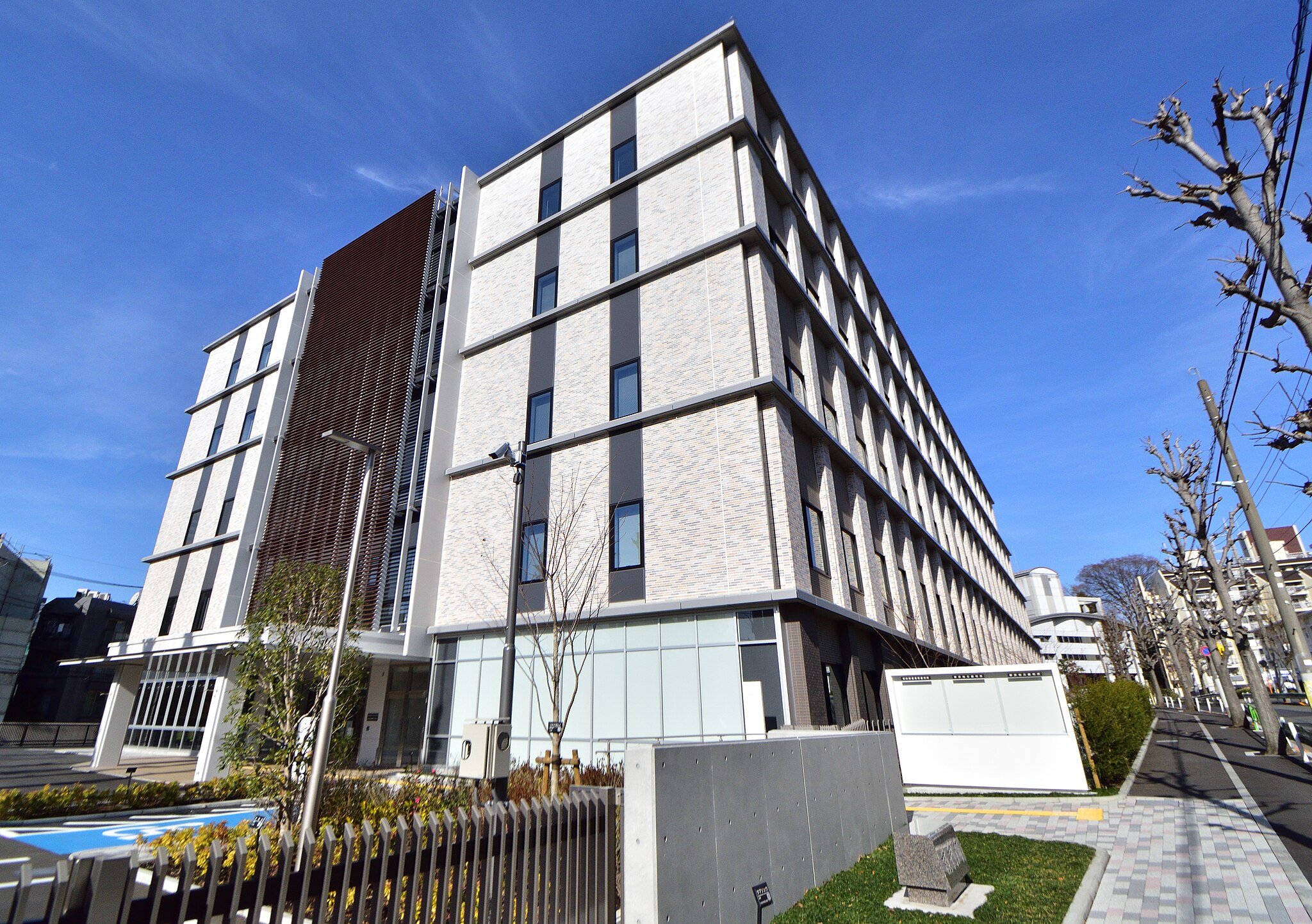
Thus, in September 2005 the IPHC overturned the lower court's preliminary injunction, ruling in favor of Justsystem.
This milestone decision became a cornerstone of Japanese software patent jurisprudence. It was the first case for the IP High Court's Grand Panel and set an important precedent for the handling of software and indirect patent infringement cases in Japan, emphasizing the importance of patent validity and inventiveness in software-related disputes.
It confirmed the non-exclusion of software from patent protection in Japan. But courts will apply rigorous claim interpretation, protecting developers against overly broad monopolies. The ruling also influenced later Japanese cases on product claims, indirect infringement, and technical effect requirements.
At BLAZE VENTURES, we have elaborate processes and qualified professionals to advise inventors and enterprises on the technical requirements for inventiveness of software and its patentability various jurisdictions.
______
[1] Intellectual Property High Court Case No.2005 (Ne) No.10040 (Sept. 30, 2005),on appeal from Tokyo District Court Case number 2004 (Wa) No.16732 (Feb 1, 2005)