Patent invalidation is the process for legally establishing that an invention was ineligible for the grant of a patent. Patents maybe wholly or partially invalidated consequent to either non-conformity with patentability criteria or some other legal defect.
A patent grants its owner the exclusive right not only to commercially exploit the invention, but also to prevent others from making, using, selling, or importing the patented invention. However, these rights are not absolute. Patent systems around the world provide mechanisms for challenging the validity of patents and ensuring exclusive patent rights are granted only to deserving inventions.
A successfully invalidated patent loses its legal enforceability, thus allowing competitors to develop and sell the invention without any infringement of rights. Though often used interchangeably, revocation is usually handled administratively by a patent office. In contrast, invalidation is typically a judicial outcome of a challenge to the patent’s validity during an infringement lawsuit in court proceedings.
A patent may be invalidated on several grounds.
A common ground is lack of novelty. If evidence exists of the patented invention having been known or disclosed to, or used by the public–in other patents, marketing collateral, or academic publications– anywhere in the world prior to the filing date of the patent application for that invention, then the granted patent can be invalidated.
Another key ground is lack of an inventive step or the presence of obviousness to a person skilled in the relevant field based on extant knowledge. Invalidation may also be effected if the patented invention lacks industrial applicability or utility; inadequate disclosure about the invention’s use, working, assembly, manufacture or construction in the specification can also invalidate a granted patent. So too, if the invention’s subject matter is ineligible–for instance, abstract ideas or natural laws.
Any extension of claims beyond the specification in the original application can also serve as a ground for invalidation.
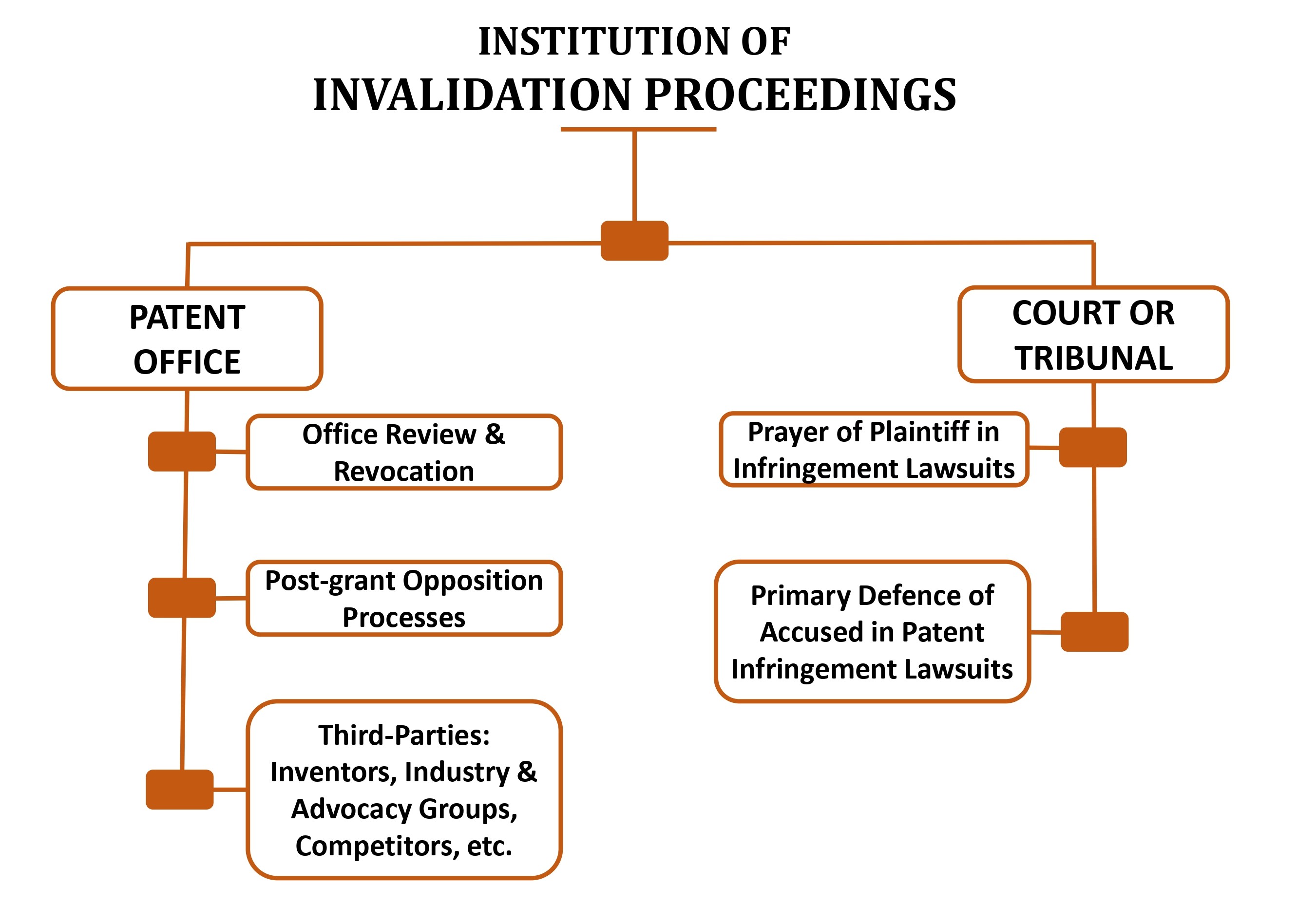
Besides patent authorities, who are empowered to review and revoke patents, any third-party, such as, an industry group, consumer advocate, inventor, competitor, or other interested party, can institute invalidation proceedings. In some jurisdictions, post-grant opposition processes permit third parties to challenge the validity of a patent shortly after its grant.
Any person sued for patent infringement can raise invalidity of the patent grant as a primary defence. If the contention of the accused person is upheld by the court, then the grant stands invalidated.
The invalidation process typically requires an extensive patent invalidity search. It is similar to a prior art or landscape search and involves examining patent databases and non-patent literature. This search aims to discover obscure or unindexed prior art that the patent examiner may have inadvertently overlooked during the patent grant process for the invention.
Depending on the relevant patent laws, the challenge might be instituted in civil courts or specialized administrative tribunals. Patent laws may also have specialized procedural provisions for such invalidation proceedings, such as, Inter Partes Review in the United States and post-grant opposition of European Patent Office.
A full invalidation results in the patentee losing all patent rights over the invention; and, in effect, the patent is deemed to have never existed. Pending infringement suits are dismissed, and licensing agreements terminated. Competitors too become free to manufacture and sell the invention without any restrictions.
In conclusion, patent invalidation serves as an essential safeguard that helps in maintaining integrity, credibility and legitimacy of the patent system. It is a checks-and-balances mechanism that not only prevents improper issue of patents for non-patentable inventions, but also promotes fair competition by ensuring access to inventions already in the public realm.
Thus, patent invalidation helps uphold and protect the interests of patent holders, inventors, competitors, and the general public, thereby fostering innovation.
At BLAZE VENTURES, we have elaborate processes and qualified professionals for advising inventors and enterprises on the strategic management and monetisation of IP assets, and, specifically in respect of patent invalidation proceedings.