The Patent Cooperation Treaty (PCT) is a multilateral agreement that simplifies and streamlines the process of seeking patent protection in multiple countries (that is, over 150 countries) via a single ‘international’ application. It obviates the need to file separate applications in each country or geography.
Administered by the World Intellectual Property Organization (WIPO) in Geneva, Switzerland, the PCT is a multilateral treaty, which was adopted in 1970 and has since become a cornerstone of the global intellectual property system.
The PCT system basically aims to institute a unified process for the international patent application process. It provides for single application and search phases, and in some cases, one preliminary examination also. But then, it transmits applications thereafter to national offices for decision making on the grant of jurisdiction-specific patents for their respective territories.
This procedure substantially reduces the cost, complexity, and administrative overhead associated with patenting in multiple geographies. While the PCT does not grant an “international patent,” it provides for a standardized initial filing, search and examination procedure that is common across member states.
The PCT process is split into two main phases: namely, the international phase, and the national phase. The procedure commences with the filing of an application with a receiving office; it is followed by an international search conducted by a competent authority.
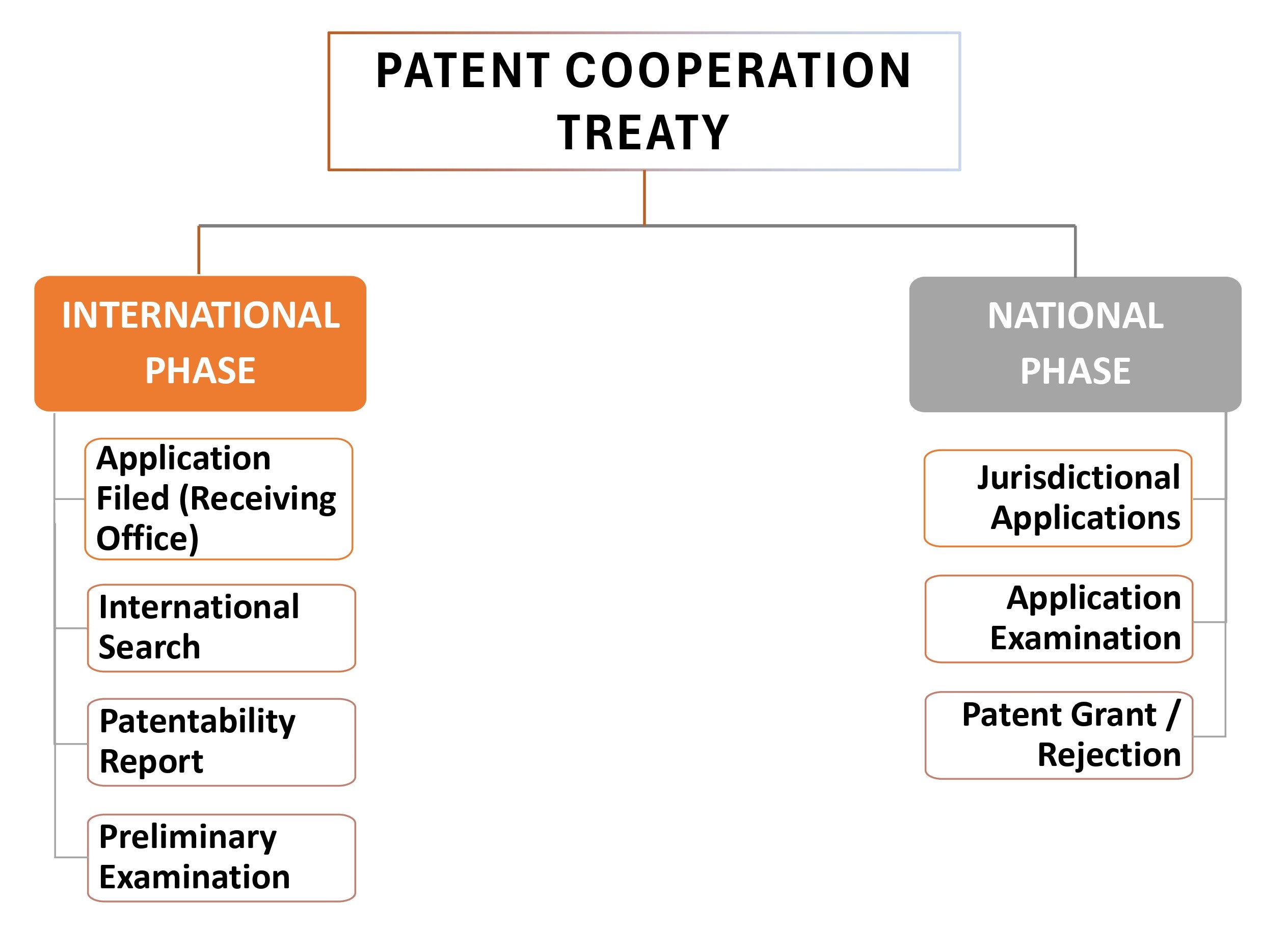
The authority then issues a report, which provides an opinion in respect of the potential patentability of the invention. Optionally, the applicant may also request an international preliminary examination to further assess the merits of the invention.
After the international phase, the national phases of designated countries are entered, wherein individual national or regional offices scrutinise the application for the grant of patents in compliance with their respective domestic laws. This phase ultimately determines whether a patent is granted or not in the corresponding jurisdiction.
The applicant has 30-31 months from the initial filing date to enter the "national phases" of specific countries; thus, this gives inventor(s) additional time to evaluate commercial potential of the invention.
The PCT offers several advantages. Firstly, it delays high costs of national filing and provides a preliminary patentability report. Furthermore, it affords additional time of 30-plus months to finalise the list of countries to pursue patent grants in. Instead of filing separate applications in every country, a single PCT application is filed, typically in the language of the home country.
Thus, the system entails enhanced coordination among patent offices. Hence, it has become an essential mechanism for inventors, businesses, scientists and researchers seeking efficient global patent protection. In conclusion, the PCT plays a vital role in harmonizing and facilitating transborder patent procedures, promoting innovation, and supporting the globalization of intellectual property rights.
At BLAZE VENTURES, we have elaborate processes and qualified professionals for helping inventors and enterprises with global protection of IP rights for their ideas, inventions and innovations.