While a patent grants exclusivity over an invention, its true power lies not in the certificate of patent grant, but in how it is actively used. For founders, innovators and enterprises, monetizing patents is about effectively protecting groundbreaking ideas and transforming them into tangible economic wealth.
Vital aspects of patent monetization include assessing patent quality— it depends on the strength, scope, and enforceability of claims, which are crucial for ascertaining patent value. Equally important is understanding the value proposition of and the market demand for the invention. Finally, a strategic analysis of the patent portfolio to identify precious assets is essential.
The monetisation strategy though entails assessing market relevance, value uniqueness, potential for infringement and current legal status. It also has to be in concert with clear goals in order to maximise intrinsic value extraction and to plan monetisation meticulously.
The primary motivation for securing a patent is the right to derive income and to earn profit conferred thereon. This is the commercial counterpart of the legal right of excluding others from having the right to monetize the patent. A strong patent portfolio does more than just shield an innovation. It acts as a significant asset that can:(a) increase company valuation; (b) build credibility; (c) create market barriers; and, (d) provide competitive advantage.
A strong patent portfolio is a distinct indicator of a company’s market position, business prospects and intrinsic value. It enables inventors to monopolize their product and prevent competitors from copying their core technology by creating IP moats to secure market position.
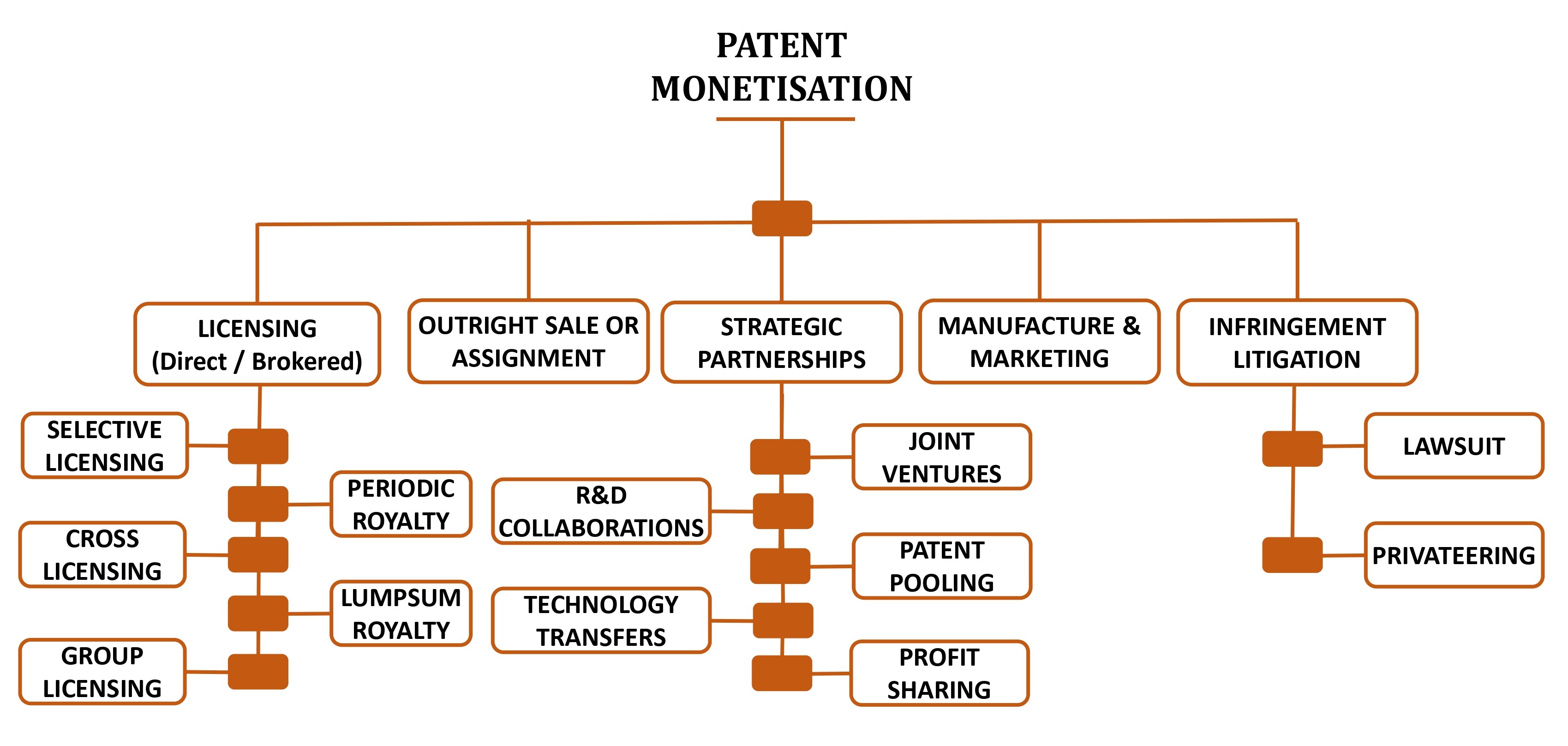
Patents also lay down a strong foundation that adds immense brand value and enhances the potential for attracting partners and investors, who actively seek out IP-backed startups. While ownership is the first step, monetizing a patent requires a sound business strategy, deep market insight, and effective execution.
Patents offer multiple pathways to financial return, aligning in different ways with an innovator’s goals and resources.
It is apparent though that for effectively monetizing patents, enterprises must align scientific and technical research; and, product design, development & engineering efforts with emerging technology trends and latent market needs. Patents aimed at core business models; compelling value propositions; and, sustainable innovations give higher financial returns and generate greater investor interest.
At BLAZE VENTURES, we have elaborate processes and qualified professionals for advising inventors and enterprises strategically on “patent monetization” that turns intellectual property into a sustainable income stream.