A patent is a legal instrument that confers inventor(s) with not only specific rights over the invention, but also a temporary monopoly thereover in exchange for a full public disclosure thereof. It gives the holder or owner the exclusive right to prevent others from making, using, copying, imitating, selling, offering for sale, or importing the invention without permission. At times, even enhancing an existing patented invention may require such permission.
A patent granted for an invention is valid for a typical period of twenty (20) years from the filing date of the patent application, subject to payment of applicable fees.
A patent confers proprietary rights, which are territorial. That is, the rights are enforceable only in the country or region where it is granted. For protection across transnational geographies, inventors must apply in multiple jurisdictions, often under international arrangements, like the Patent Cooperation Treaty (PCT).
The scope of a patent’s protection is defined by its claims, which act as legal boundaries outlining what the invention covers. Any unauthorized activity or the violation of rights that falls within the purview of the claims, detailed in a patented invention, constitutes infringement. Such infringement could be intentional or unintentional though.
Besides territorial restrictions, other statutory limitations are also applicable to patent rights. To begin with, once the 20-year time validity of the patent is over, the invention becomes part of the public domain.
Further, government can utilise certain patents for public good without the permission of inventor(s). Such patented inventions could pertain to fields such as national defence, public heath, etc. Enforcement of patent rights always require legal action, which can be expensive, complicated and time-consuming.
The proprietary right of ownership in a patent generally vests in the inventor(s). However, patent rights may be transferred to an employer, company or any third party through mutual, contractually-binding agreements, such as, agreements for licensing, royalty payments, outright sale, manufacturing, assignment, etc. Such transfers enable the commercial use of the intellectual property rights therein.
Patent infringement litigation is the legal process instituted for not only asserting rights and redressing grievances in respect of patents, but also claiming monetary damages and seeking injunctive reliefs for injuries sustained consequent to the violation of such patent rights.
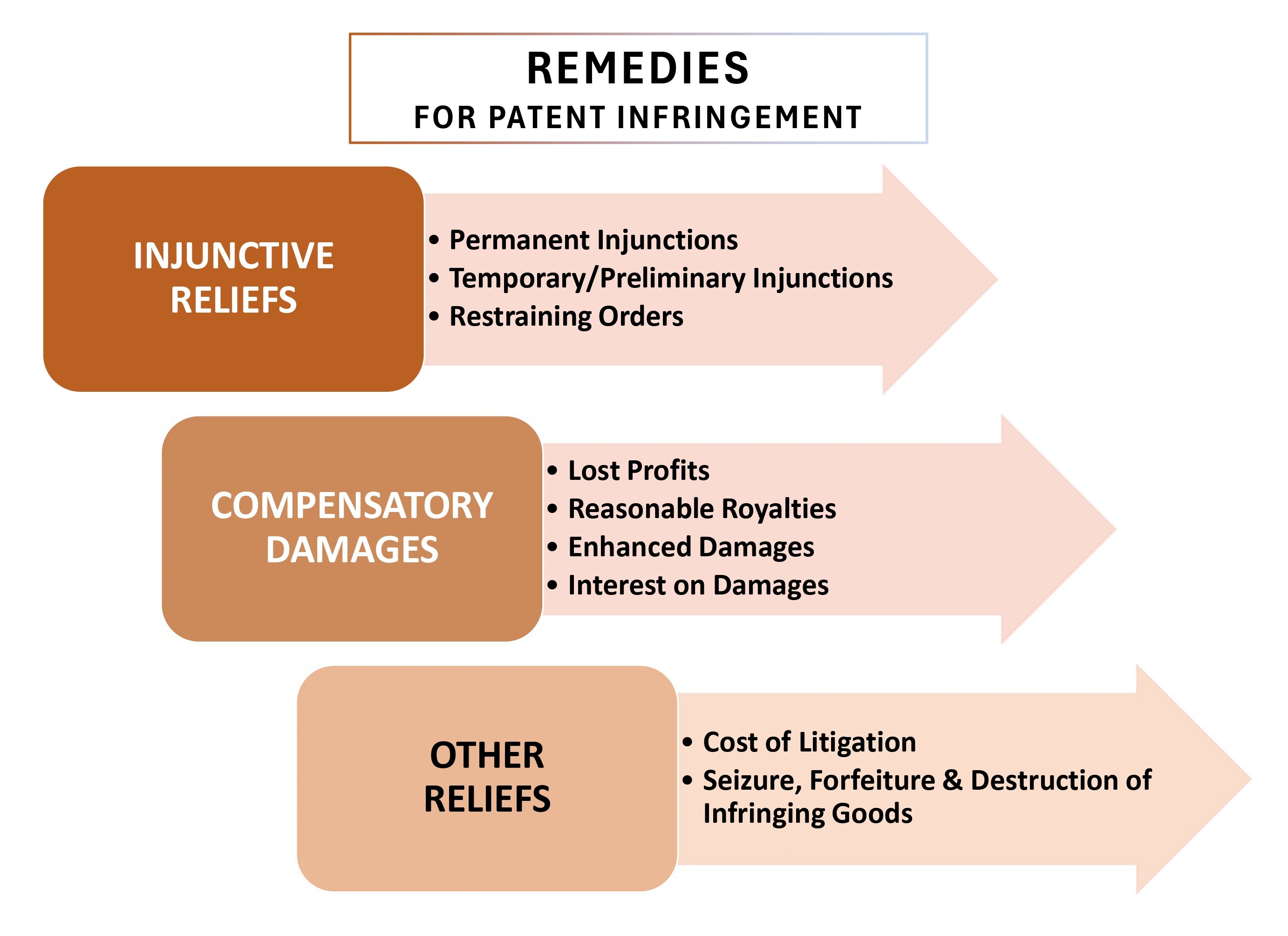
The judicial process therefor entails adjudication of the inventor or patentholder’s allegation that another party has unauthorizedly used, made, sold, copied, imitated, imported or otherwise done some unlawful act in respect of the patent.
In summary, patents help foster innovation, entrepreneurship and knowledge sharing. They provide inventors with strong, but bounded legal rights to control how their inventions are utilized for economic gain. The protection is afforded to inventors without compromising public interest. Effective use of patent rights requires strategic decisions for maximizing their intrinsic commercial and technological value.
At BLAZE VENTURES, we have elaborate processes and qualified professionals for helping inventors and enterprises enforce patent rights effectively.