The Court of Appeal’s decision in HTC Europe Co. Ltd v Apple Inc. (2013)[1] marked a significant development in the jurisprudence on patent law with regard to computer-based inventions. It rebalanced UK law in respect of genuine technical innovations in software, which show concrete technical contribution rather than abstract business or programming logic.
The appeal arose from the High Court judgment (2012), which had found two of Apple’s patents relating to smartphone user-interface technology either invalid or non-infringing. A key point of contention was the exclusion of Apple’s EP 2,098,948 (“948”) invention on the grounds that it was a “computer program as such” under the provisions of the Patents Act, 1977.
Multi-touch enabled devices, such as, Apple's iPhone, have screens capable of recognizing single and multiple touch events. The tactile sensitivity of such devices extends to inputs in different ways and at multiple locations on the device's touch screen. Further, the touch-sensitive screens of these devices must be capable of recognising single and multiple touch events.
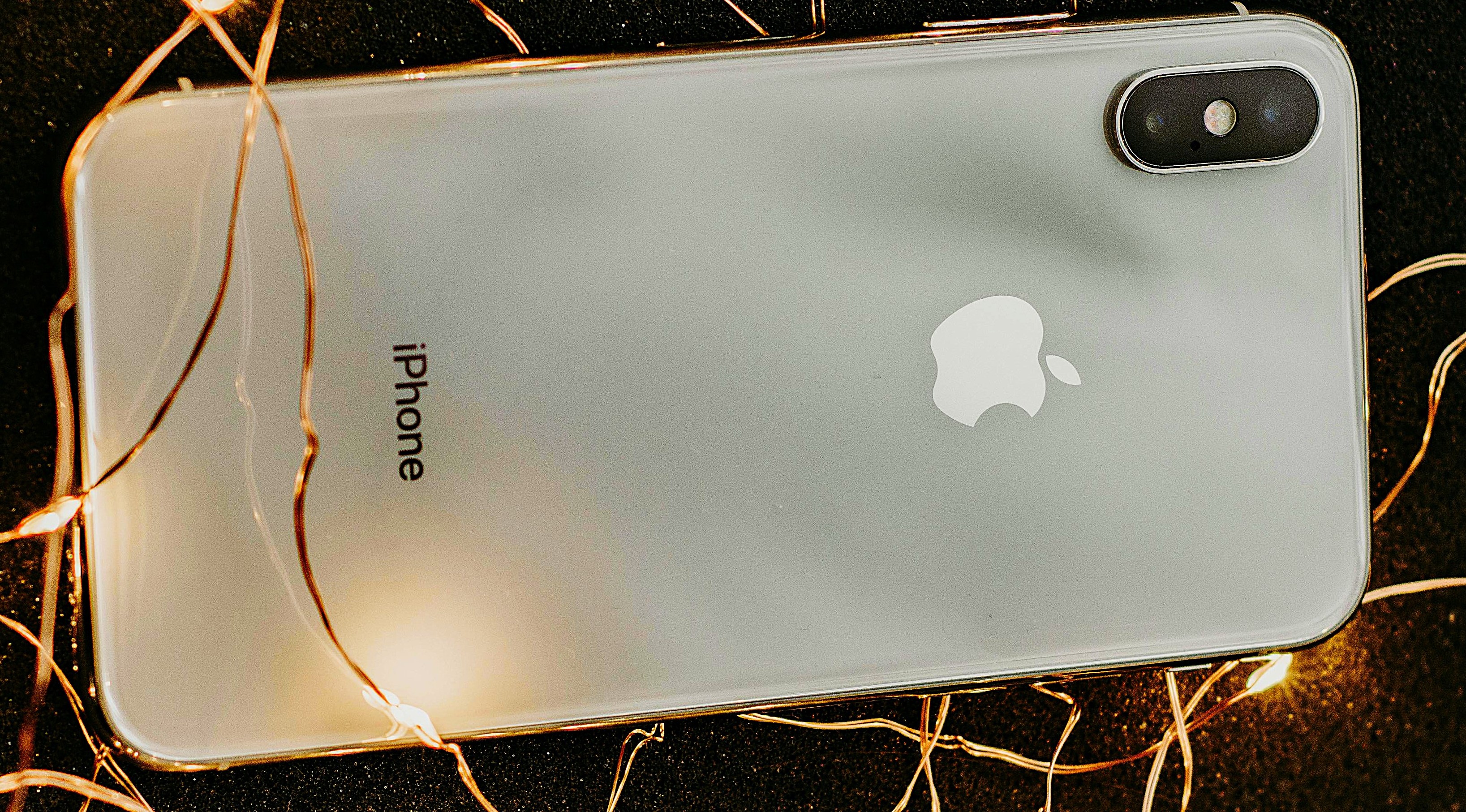
Ensuring that software applications on such touch-sensitive devices are able to assess, process and respond to all the different touches has posed challenges and complexities for developers. Apple’s "948"patent addressed the problem of dealing with multiple simultaneous touches by proposing the use of two particular different types of "flags" associated with different parts of the display ("views").
The High Court had declared claims 1 and 2 of the “948” patent invalid on the grounds that they pertained to computer programs.
Despite HTC and Apple having settled their wider disputes by then, the latter appealed the exclusion finding of the High Court. The Comptroller-General of Patents intervened to defend the public interest.
The Court of Appeal reassessed whether the High Court had erred in its pronouncement, because the claims related to computer devices with touch-sensitive screens that are capable of recognising single and multiple touch events.
"A program for a computer" is one of several exclusions from patentability (see s.1(2)(c) Patents Act 1977), which mirrors Article 52(2)(c) of the European Patent Convention (EPC). In assessing whether a claimed invention falls into this excluded category, the Court of Appeal felt the cardinal question to answer was whether the invention made a technical contribution to the art by examining the function the computer program performs.
In answering this question, the Court of Appeal considered a number of cases, concluding that it was not possible to define a clear rule to determine whether or not a program is excluded, and each case must be determined on its own facts. It further deemed it appropriate to apply the four-step test of Aerotel Ltd v Telco Holding Ltd; Macrossan's Patent Application [2007][2].
Additionally, the principles aid down in in Symbian Ltd. v. Comptroller General of Patents (2008) [3] guided the exclusion analysis. Earlier decisions too, including AT&T Knowledge Ventures LP v. Comptroller General of Patents, Designs & Trade Marks (2009)[4], had articulated “signposts”—such as, improvements to the reliability, functionality or speed of a computer—to determine the software’s technical contribution.
The Court of Appeal reversed the high court’s judgment invalidating claims 1 and 2 of the “948” patent on the grounds that they related to computer programs. The 948-patent described a mechanism for handling multi-touch events in a graphical user interface—a practical solution to the management of simultaneous touch inputs within a software architecture.

The appellate court observed that the invention improved the computer’s operation and hence made a technical contribution. It was not excluded merely because it was realised by a program. The judges stressed that the correct focus is on what the invention does, and not the form of its implementation.
It was observed that “the solution is embodied in software” and that an “invention which is patentable in accordance with conventional patentable criteria does not become unpatentable because a computer program is used to implement it.”
In short, the Court adopted amore flexible interpretation of what constitutes “technical effects.” It clarified that a software-based invention can be patentable if it makes the computer work better or more efficiently. This interpretation broadened the range of potentially patentable software under UK law and also aligned domestic practice more closely with the European Patent Office’s approach, which recognises inventions that achieve a “further technical effect.”
However, regarding Apple’s EP2,964,022 (“022”) patent (the “slide-to-unlock” feature), the Court of Appeal held that it was obvious over prior art and thus invalid, though not excluded subject matter.
The situation was further surmised as thus: "…ignore the words "computer program….as such" and instead concentrate on whether there is a technical function". Patentability is therefore a matter of substance and not form.
The case provides useful guidance on the approach for ascertaining whether a software or computer-based invention is falls within excluded subject matter and is non-patentable. The decision significantly narrowed the scope of the “computer program as such” exclusion.
At BLAZEVENTURES, we have elaborate processes and qualified professionals for ensuring that the software and computer-related ideas, inventions, innovations and implementations of developers and enterprises are held patentable under applicable patent laws.
__________
[1] EWCA Civ 451 (Court of Appeal)
[2] EWCA Civ 1371, [2007] RPC 7
[3] EWCA Civ 1066, [2008]
[4] [2009] EWHC 343 (Pat), [2009] FSR 19