The Special 301 Report, published annually by the Office of the United States Trade Representative (USTR), emphasizes patent-related issues prevailing in countries with inadequate intellectual property (IP) regimes. It aims to protect U.S. economic interests by promoting robust patent protections globally.
Yet, the report’s approach to patents reveals several lacunae and loopholes that undermine its fairness, effectiveness, and alignment with international norms. These limitations disproportionately affect developing countries and raise concerns about prioritizing U.S. corporate interests over global public welfare.
The main criticism of the Special 301 Report is the lack of empirical evidence and objective analysis. It relies instead on a subjective assessment of intellectual property (IP) protection and enforcement.
The report is influenced by domestic industry lobbies, which can lead to a bias in its foreign intellectual property (IP) and trade policy recommendations. This perceived bias often results in arbitrary, prejudiced and unreasonable recommendations.
Then again, critics have argued that the report often overlooks significant IP-related advancements and improvements made by countries included on the list, which leads to unfair accusations. The report is a unilateral review by the U.S. government, which lacks the collective perspective of international bodies and trading partners. Thus, its findings are not always based on a fair, unbiased and comprehensive evaluation.
Finally, the report's focus on specific IP standards can create undue pressure on countries for adopting policies that may not align with their national priorities. This may pose harmonization challenges in respect of public health and access to medicines.
The Special 301 Report frequently criticizes countries for not adopting patent protections that go beyond the minimum requirements of the WTO's Agreement on Trade-Related Aspects of Intellectual Property Rights (TRIPS). Such arm-twisting runs contrary to the spirit of multilateral agreements.
TRIPS allows flexibilities, such as compulsory licensing and exclusions of certain inventions, such as, those against public order or health, to balance IP protection with public interest. However, the USTR often labels countries, like India, Argentina and Chile, as deficient for using these flexibilities, particularly in pharmaceuticals.
A good example is Section 3(d) of the Patents Act, 1970, in India. It prevents "evergreening" by requiring enhanced efficacy for new forms of known substances. Hence, despite being TRIPS-compliant, it has been repeatedly flagged as a barrier to US pharmaceutical interests. This unilateral demand for stricter patent regimes ignores the genuine developmental needs of poorer nations and pressurizes them to adopt patent laws, which favour extended monopolies for patentholders.
The report heavily reflects the influence of U.S. lobbies, such as PhRMA, which advocate for stronger patent protections. Countries are criticized for delays in patent grants, weak data exclusivity, or issue of compulsory licenses for life-saving drugs, even when such actions align with public health requirements.
For instance, India’s 2012 compulsory license for Bayer’s cancer drug, Nexavar was highlighted in past reports as undermining patent rights, despite enabling affordable generics for patients in a low-income country. This focus on pharmaceutical patents often sidelines the needs of developing nations to prioritize access to medicines. It creates an imbalance that serves U.S. corporate interests over global equity.
The report’s assessment of patent regimes is often subjective, relying on anecdotal complaints from U.S. industries rather than objective data. For instance, nations like India and Mexico are cited for patent pendency, that is, delays in granting patents. Yet, improvements that reduce patent application backlog or streamline processes in these countries are rarely acknowledged.
Similarly, resource constraints or local contexts are often disregarded to criticise Argentina’s broad patent exclusions and Venezuela’s outdated patent regime. This subjectivity fuels accusations that the report serves as a political tool to intimidate countries rather than a fair evaluation of their respective IP systems.
A significant loophole is the report’s frequent failure to adequately address the misappropriation of traditional knowledge through patents, particularly in agriculture and biotechnology. The report rarely condemns such biopiracy by U.S. corporations; it focuses instead on enforcement gaps in other nations, which reveals a hypocritical approach to addressing global patent abuses.
Developing countries, including India, argue that Western companies exploit their genetic resources and traditional knowledge by patenting derivatives without consent or benefit-sharing. The Basmati rice case is a prime example, where a U.S. company patented hybrid rice strains derived from Indian varieties.
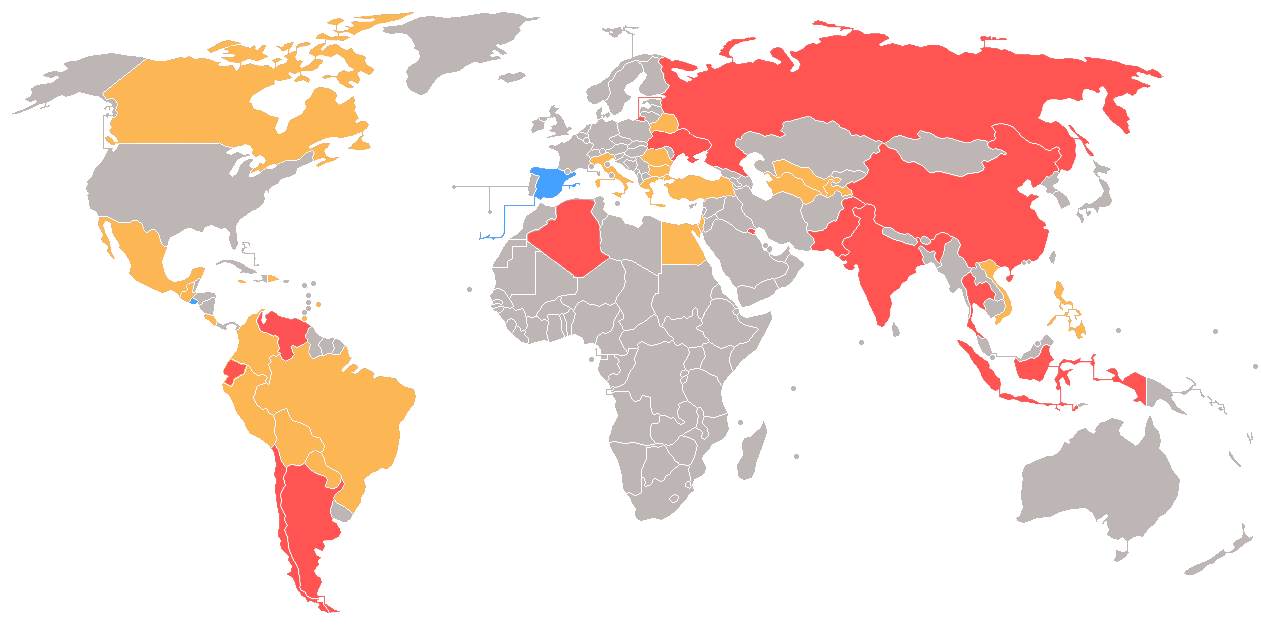
Many countries, such as, Argentina, India, Indonesia, Mexico, etc., are put on the Priority Watch List citing inefficient patenting procedures, deficient IP enforcement processes and persistent weaknesses in market access. Other nations, like Chile and China have been singled out citing slow pace of legal reforms, weak patenting regimes, unpredictable enforcement mechanisms or lack of legislative progress.
It is alleged that India’s Patents Act creates uncertainty through discretionary application of patentability criteria; prolonged examination timelines; and, burdensome reporting requirements. The report ignores that judicial inefficiencies are a systemic malaise. India is also selectively targeted for maintaining high customs duties on IP-intensive goods, such as, pharmaceuticals, if only in public interest.
China is accused of having examination standards are opaque, perhaps not without reason. IP enforcement and licensing policies are discriminatory too. Further, forced technology transfer; delays in preliminary injunctions, and, bias toward domestic firms have been flagged as causes for concern. China’s IP regime is heavily state-directed and strongly oriented towards furthering national self-reliance and “technological sovereignty.”
The report’s use of unilateral trade measures, such as tariffs or sanctions, to enforce patent protections are violative of WTO tenets, particularly, the most-favoured-nation (MFN) clause. Such threats for patent-related deficiencies implies the USTR is bypassing multilateral dispute resolution mechanisms; it undermines global trade norms and adjudication procedures.
It is, therefore, no wonder that a WTO panel in 2020 ruled certain U.S. tariffs on China, linked to IP issues highlighted in Special 301 reports, were inconsistent with WTO rules.
By pressuring countries to opt for stringent patent laws, the report directly hinders innovation and hampers access to technology in developing nations, which commonly face resource constraints in challenging foreign patents.
Extended patent terms and restrictions on compulsory licensing drive up the cost of medicines and agricultural inputs, impacting public health and food security. The watch list’s pressure tactics can divert attention in these nations away from protecting heritage products and traditional knowledge systems.
This Special 301 Report’s focus on patent maximalism can stifle local industries and limit technology transfer, exacerbating economic disparities. The report unjustly glosses over how US and Western patent regimes enable, even promote biopiracy and Geographical Indications (GI) misappropriation.
The Special 301 Report is riddled with loopholes. The report conveniently fails to advocate for stronger international protections for GIs and traditional knowledge. Thus, it perpetuates an inequitable IP landscape; prevents the initiation of measures in public interest; and, promotes the exploitation of traditional knowledge. The misappropriation with patents of GIs, like Basmati rice, exemplifies how the West surreptitiously, if not deviously usurps traditional knowledge.
.jpg)
The report’s chastisement only harms and dampens the economic progress of developing nations. By prioritizing corporate profits over innovation equity, public welfare and global well-being, the browbeating approach of the report reflects a mindset of hegemonic intimidation. Addressing the loopholes and limitations in the Special 301 Report requires a balanced, multilateral approach to IP protection that respects both technological innovation and traditional heritage.
At BLAZE VENTURES, we have elaborate processes and qualified professionals for protecting the IP rights in ideas, inventions and innovations of scientists, engineers and enterprises the world over.