In the world of innovation, timing is often viewed as a key determining factor for success. The decision on when a patent application should be filed is considered as strategic as the invention itself. If an application is filed too early, the idea may not have reached full development and if filed too late, the invention could be claimed by someone else.
The patenting decision is often shaped by several factors, such as, technical merit, legal prerequisites, and commercial considerations. The foremost aspect is the patentability of the invention, assessed on the criteria of novelty, inventive step, and industrial applicability.
Prior-art analysis determines whether the invention is truly novel. Non-obviousness to a person skilled in the art of the invention is also a condition precedent for patentability. So, too the utility and manufacturability, that is, the industrial applicability of the invention. Further, technical strength and adequacy of disclosure influence enforceability and scope of protection.
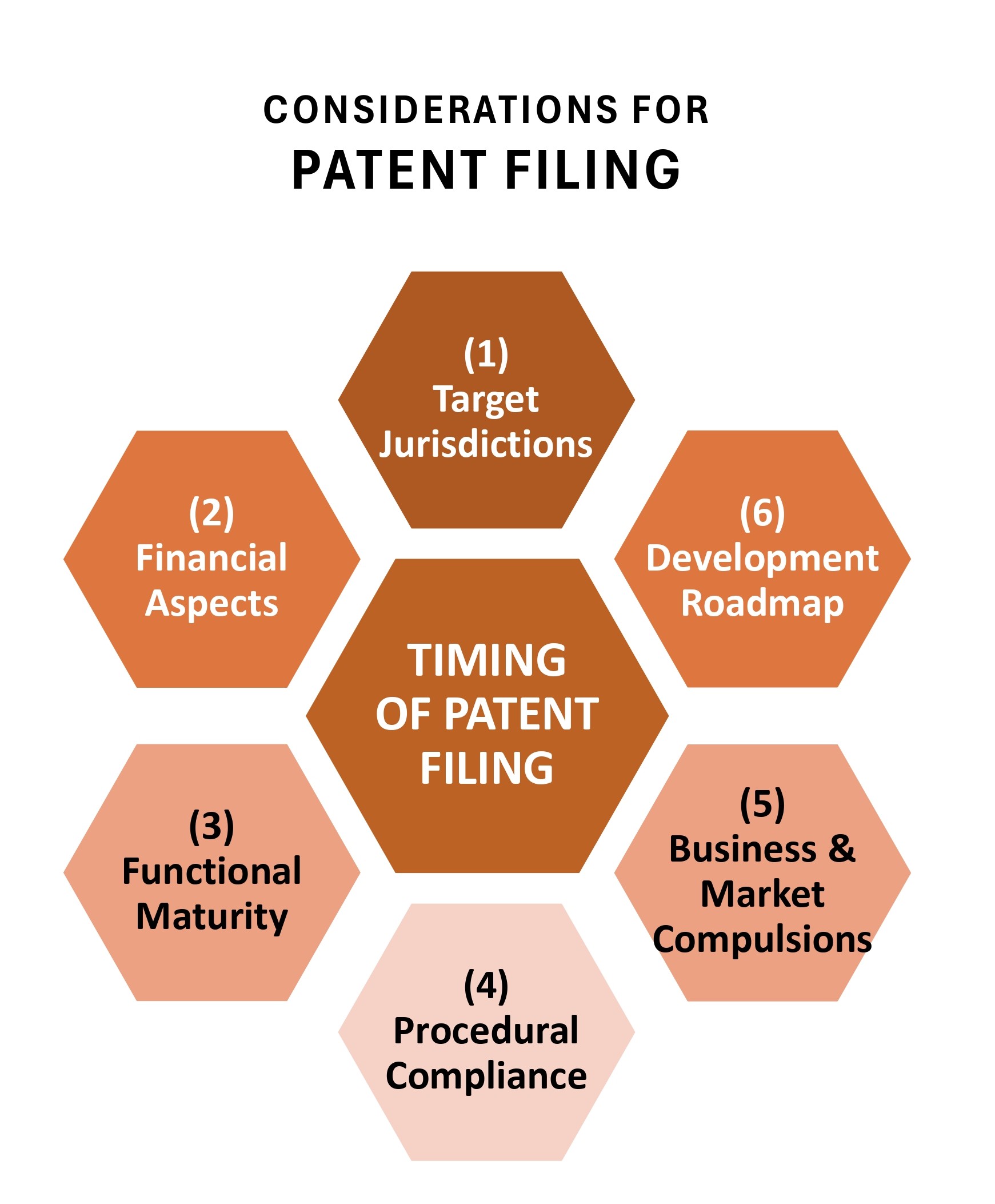
Also vital are business factors such as market potential, competitive landscape, value proposition, costs of prosecution, and long-term monetisation value. Functional and societal impact too are of relevance. Jurisdictional laws and examination practices often play a decisive role.
The decision of filing a patent must obviously not be made in haste. It must be aligned with market needs and technological readiness; and, tempered with the business strategy, and overall goals of the enterprise. The timing of a patent application is especially crucial. Primary criteria for filing legally sound and commercially meaningful patent applications include:
Once there is clarity on the patenting strategy, the inventor/s or designated assignee can file application/s with the relevant patent office/s. The legal and technical intricacies of accurately drafting claims, comprehensively describing the invention, and meeting procedural requirements can be daunting.
Given that patent applications typically undergo lengthy examination periods, even minor mistakes can cause significant delays that risk exposing sensitive or confidential details of the invention to the public, which competitors can exploit.
Hence, professional guidance is strongly recommended, or rather indispensable, more so for inventors who are unfamiliar with the patenting process. It has distinct advantages— such as, ensuring compliance with filing requirements; improving patentability; and, avoiding costly errors, delays or even rejection.
At Blaze Ventures, we have elaborate processes and qualified professionals for advising inventors and enterprises on filing file applications and securing patents for ideas, inventions and innovations in a timely and efficient manner.