Carrot and stick licensing is a strategic approach for patent enforcement and monetisation. It combines incentives (“carrots”) and deterrents (“sticks”) to influence the behaviour of potential licensees. This model recognises that patent holders can maximise the value of their patent assets not only by offering attractive licensing opportunities but also by credibly enforcing their rights when necessary.
Carrot licensing is a friendly and voluntary method, wherein the patent owner extends attractive terms to encourage adoption. The goal is to persuade potential (non-infringing) licensees by convincing them that licensing the technology will be beneficial to them.
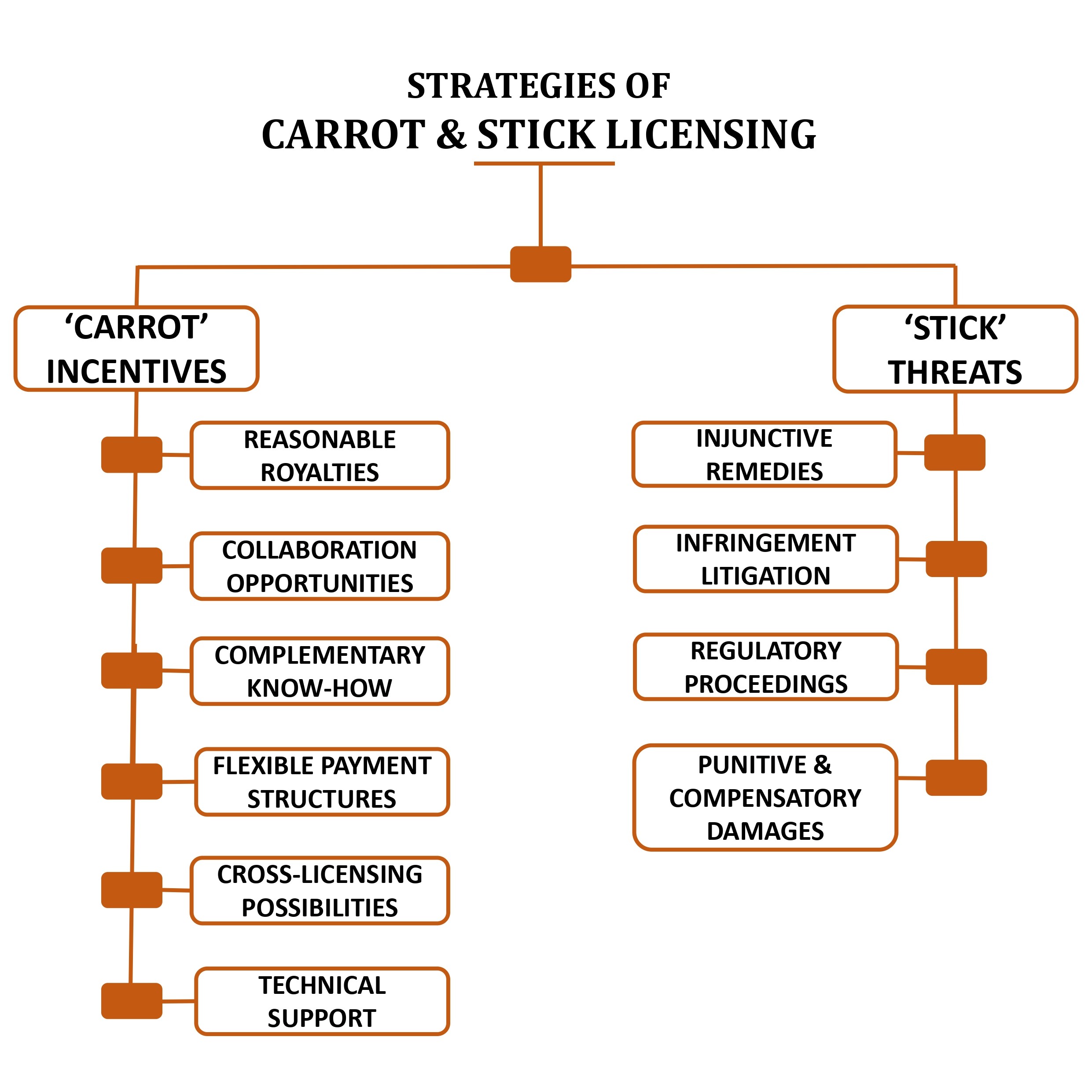
It often entails the proactive, persuasive use of incentives; it focuses on positive inducements, such as, reasonable royalties, collaboration opportunities, access to complementary know-how, flexible payment structures, cross-licensing possibilities, technical support, etc., to voluntarily attract licensees, focusing on mutual benefit.
In some industries, like software, pharmaceuticals, and telecommunications, such incentives foster cooperative partnerships, lead to collaborative R&D endeavors and accelerate market adoption of patented inventions.
For instance, offering early-bird discounts, field-of-use limitations, bundled patent portfolios, and other favourable terms can reduce transaction costs, make licensing commercially appealing while maintaining the patent holder’s long-term interests.
On the contrary, stick licensing is reactive and coercive. This strategy is used typically when a patent owner discovers infringement. In such scenarios, it leverages the threat of litigation to monetize infringement by forcing the target to choose between licensing on reasonable terms and expensive legal battles.
Thus, the “stick” component is confrontational; it relies on the credible threat of lawsuits or actual exercise of enforcement mechanisms. Such legal actions include claims of punitive and compensatory damages, infringement litigation, injunctions, or initiating proceedings before regulatory and other competent authorities.
The stick is particularly effective when the patent is strong, well-drafted, and validated across key jurisdictions. The mere existence of a litigation risk—especially in markets where injunctions can disrupt business operations—often pushes reluctant infringers towards negotiation and settlement.
This is a variation wherein an infringer opts for a license in order to avoid the likelihood of a lawsuit ("iron fist"), because such litigation would be more costly than the license itself, even if it is not explicitly threatened.
The effectiveness of the above methods lies in balancing the carrot and stick elements. Excessive reliance on the latter may make the patent owner seem overly aggressive, which could deter strategic alliances, discourage collaborative partners and attract regulatory scrutiny, particularly under competition law. Conversely, an overly soft or generous ‘carrot’ with no credible enforcement threat may invite free-riding and undermine the patent’s exclusivity.
In most patent infringement scenarios, especially in standard-essential patents (SEPs) and technology-heavy industries, carrot and stick licensing results in fair, reasonable, and non-discriminatory (FRAND) outcomes. By juxtaposing commercial incentives with legal enforcement, it promotes efficient technology dissemination without sacrificing the fundamental, foundational aspect of patents: that of rewarding innovation through exclusive rights.
At BLAZE VENTURES, we have elaborate processes and qualified professionals to advise parties on various licensing strategies for patented inventions.