Patent abandonment pertains to the voluntary or involuntary relinquishment of exclusive patent rights. It occurs when an applicant or patentee stops pursuing a filed (pending) application or fails to maintain an active, granted patent. In either case, the applicant or patentee fails to conform with legal requirements or discontinues the pursuit of IP protection.
An abandonment may be effected at any stage of the patent lifecycle–either at the patent application stage or after the patent grant. After abandonment, the underlying invention falls into the public domain and can be freely used, sold, manufactured or commercialized by any person, including competitors.
This occurs when a patent application is abandoned prior to its official approval, consequent to which the application process is terminated.
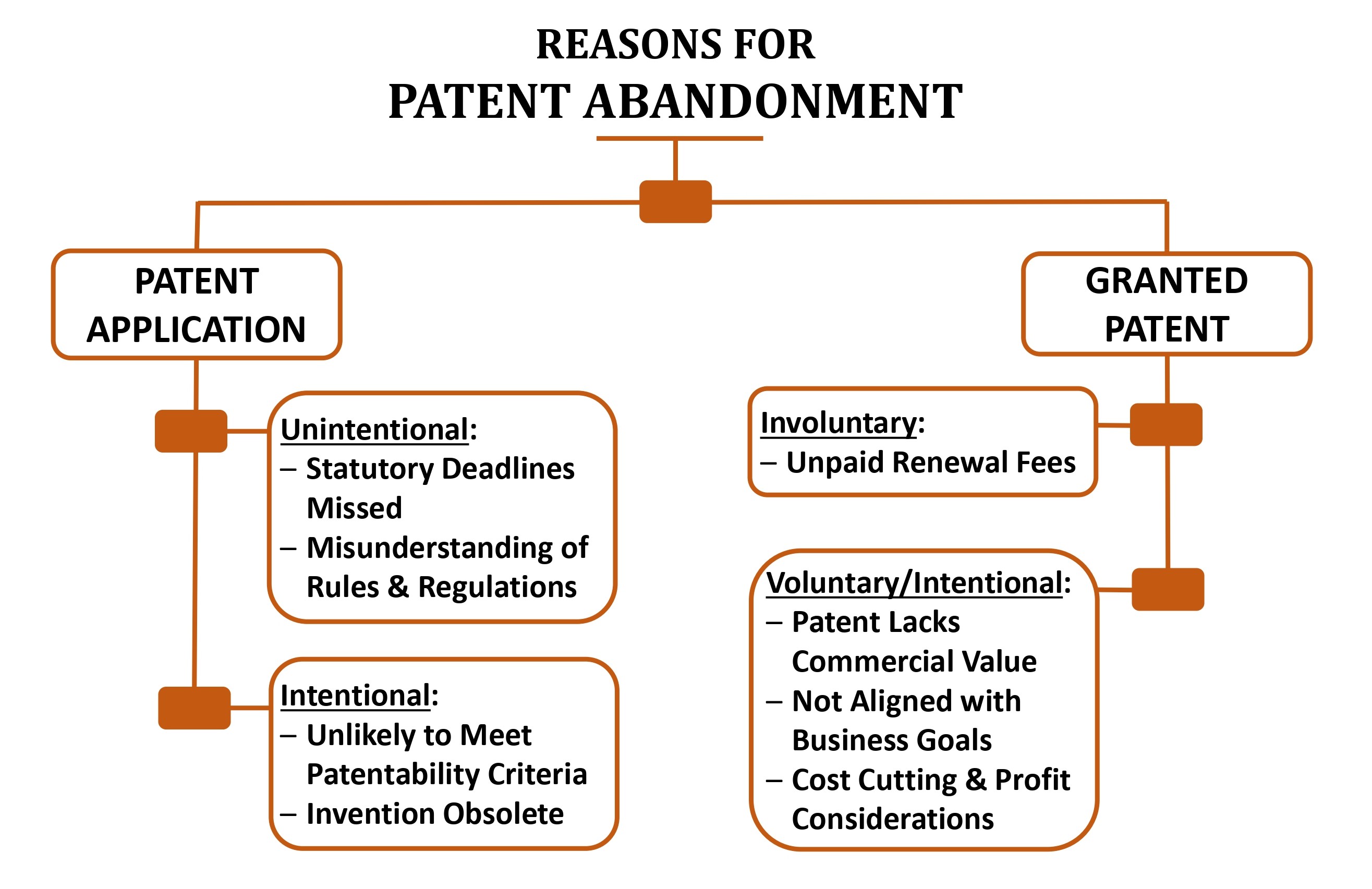
Many reasons exist for patent application abandonment. It usually occurs when an applicant misses prescribed deadlines in respect of filing of responses to examination reports or office actions; or, the submission of documents therefor. The applicant may also misunderstand statutory and procedural rules.
Applications may be intentionally abandoned too, if the patent applicant later recognizes that the invention unlikely to meet patentability criteria; or, the invention has become obsolete because of technical advances. In such scenarios, the applicant may voluntarily request the patent office to discontinue the application processing.
Patent abandonment may occur after a patent has been granted too.
Most patent systems require the payment of periodic maintenance, renewal, or annuity fees to keep a patent in force. Any failure to such fees during the patent’s lifespan may result in it being deemed to have been abandoned (or lapsed).
Keeping a patent active is not only an expensive endeavor, but also a strategic business decision. If the patent owner realizes the invention lacks commercial value; is unprofitable; or, no longer meets their business goals, then the patentee may intentionally stop paying the fees to cut costs.
Once a patent is abandoned, the underlying invention falls into the public domain. Such an invention can then can be commercially exploited without the permission of the former patent holder.
In many jurisdictions, an abandoned patent or application can be revived or reinstated, provided the applicant demonstrates that the failure was unintentional and complies with the procedural requirements applicable therefor. The patentee is required to generally file a petition or application; pay the stipulated fee & penalty; and, meet the procedural response for restoring the patent's active status.
Patent abandonment serves a critical policy objective. It prevents dormant applications and patents from occupying legal space and impeding innovation. It ensures that inactive patents become available for public use. This fosters the dissemination of technical knowledge; encourages innovation; and, promotes competitiveness in the market.
Thus, patent abandonment is a vital aspect of patent law. An appreciation of its causes and consequences is essential for effective patent portfolio management and intellectual property strategy.
At BLAZE VENTURES, we have elaborate processes and qualified professionals for advising inventors and enterprises on the strategic management and monetisation of IP assets.