Assignment refers to the transfer of patent ownership from one party to another. Such assignment takes place when inventors or owners transfer their rights to a company, or during mergers and acquisitions, or when an employee creates an invention during the course of employment.
The assignment can occur at any time, including prior to the grant of the patent. But the assignment must be in writing and is sometimes done early in the process to generate investor interest or facilitate commercialization.
It is a common practice for inventors to assign rights in favour of a company, either prior to grant or after, for the purpose of attracting investors or commercializing inventions early. Many employment contracts mandate the assignment of inventions of employees to employers, in particular if company resources were used for the invention, which may be related to employee’s job functions and duties.
Patents, as intangible assets, also get transferred to acquiring companies in corporate amalgamation or M&A transactions. The acquiring entity receives the patent rights assigned as part of such a deal. Owners of patents may also assign rights to purchasing parties, who are interested in commercialising the invention.
Further, when a patent holder dies, then the heirs, successors and legal representatives may receive the patent ownership rights through testamentary or intestate succession. So also, rights can be transferred during bankruptcy and liquidation proceedings.
Assignment transfers complete ownership of the patent to the assignee. The assignment agreement must clearly identify the patent being assigned; any ambiguous or conditional language is likely to render the assignment invalid. If the inventor or the owner of the patent wants to retain some rights, licensing may be a preferable option.
It is also vital to remember that patent rights cannot be transferred orally. A written, signed assignment agreement (or, deed of assignment; or, IP transfer agreement) is legally mandatory for transferring patent rights in most jurisdictions, including European Union, India, and the United States. The assignment agreement must have the express consent of both parties.
Furthermore, registering the assignment with the patent office ensures that the change of ownership is publicly recognized; this provides protection in future disputes to the assignor. Recordation with the patent office is not required for validating the transfer inter se the parties, but is essential for enforceability against third parties. Failure to record or register may result in loss of priority against subsequent bona fide purchasers; it may also pose difficulties during enforcement of patent rights.
The assignment agreement must be drafted to reflect the complete and final understanding between the parties; it must be compliant with all prescribed local laws, including statutory and regulatory provisions, and procedural formalities.
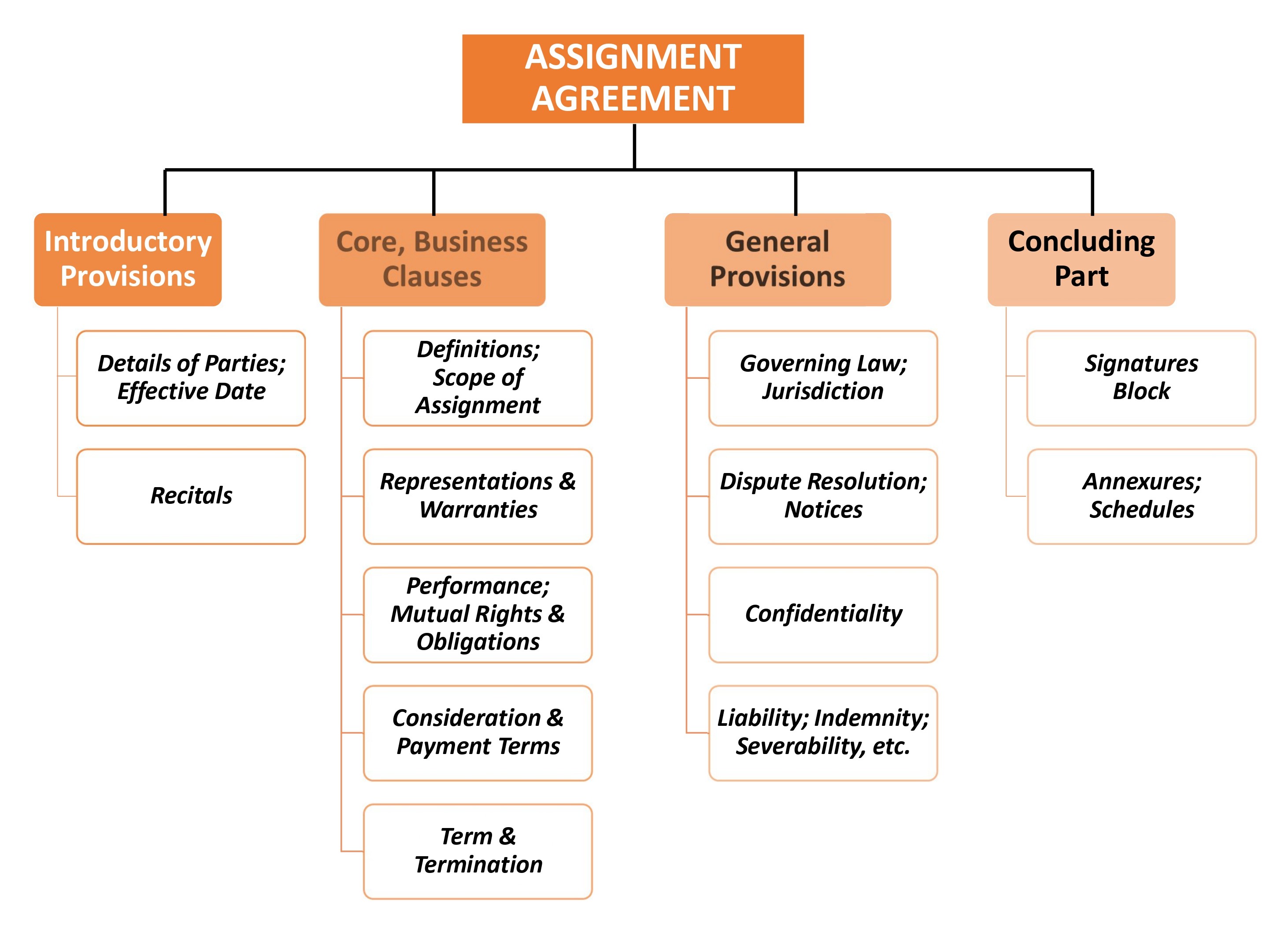
The agreement has the preamble, or recitals, which are comprised of the introductory paragraphs that detail the context, background, and intent of the parties. It documents the names and descriptions of the parties, patent details, covenants (mutual rights and obligations) of the parties; the effective date, and consideration. The consideration may entail various modes, like lumpsum payments, royalties, equity (shares), etc. In some territories, assignments for “zero consideration” are permissible. The assignment clause itself outlines the conditions for transfer.
Other important clauses are: warranties & representations; assignment, governing law, notices, term, termination, liability, severability, confidentiality and indemnity clauses. The assignment clause outlines the conditions for transfer. Warranties and representations in the agreement act as mutual assurances of each party to the other about pertinent facts. The clause is aimed at mitigating risk and providing legal remedies to the parties.
The liability clause stipulates whether the assignor remains liable for obligations post assignment; or, whether liability transfers entirely to the assignee. The indemnity clause offers assurances and protections for the parties, in respect of transferred rights and obligations. The severability clause is inserted to ensure that if one clause is declared invalid, unlawful or non-enforceable, the rest of the agreement continues to have effect.
A “signatures block” for the parties to affix their respective signatures with the date is the concluding part of the agreement. In some jurisdictions a unilateral assignment with only the assignor’s signature is valid. Electronic signatures of the parties are permitted, if not barred under local laws. Some jurisdictions may require the document to be attested and notarized.
At BLAZEVENTURES, we have elaborate processes and qualified professionals for drafting customized “assignment agreements” that are legally valid and enforceable.