Patent ownership rights can be voluntarily transferred by one party in favour of another through an assignment agreement, which is a legal document that transfers ownership of a patent or patent application from one party (the assignor) to another (the assignee).
Assignment decisions are generally based on considerations of strategic goals, investment readiness, and long-term commercialization plans. To be legally valid and enforceable, certain requirements must be met. These requirements exist in most jurisdictions (US, UK, EU, India, etc.), though formatting and filing processes may differ slightly.
Legally-binding and enforceable assignment agreements transfer rights, interests, and obligations from the employee or inventor (assignor) to the employer or other beneficiary (assignee). Owners of IP rights may also convey such rights in favour of third parties. This allows the assignee to takeover the benefits and responsibilities of the original contract.
Business organisations may include explicit IP assignment clauses in their charter or incorporation documents to bind the promoters, founders and directors to the mandatory assignment of patents to such business entities. Some enterprises may also enter into separate assignment agreements with each of their employees, including promoters, for conveying patent rights over their inventions in favour of the employers.
The assignment, though, must be in writing. It must also include clear and unambiguous language for transferring ownership. Ambiguous or conditional language may invalidate the assignment.
In early-stage startups, founders and promoters may develop inventions jointly. In such cases, patent ownership rights can be shared by the founders, unless they have already assigned their rights to the company. Founders typically assign patent rights to the business entity to simplify licensing, attract investors, enhance valuations, ensure coherent IP management, and improve competitiveness.
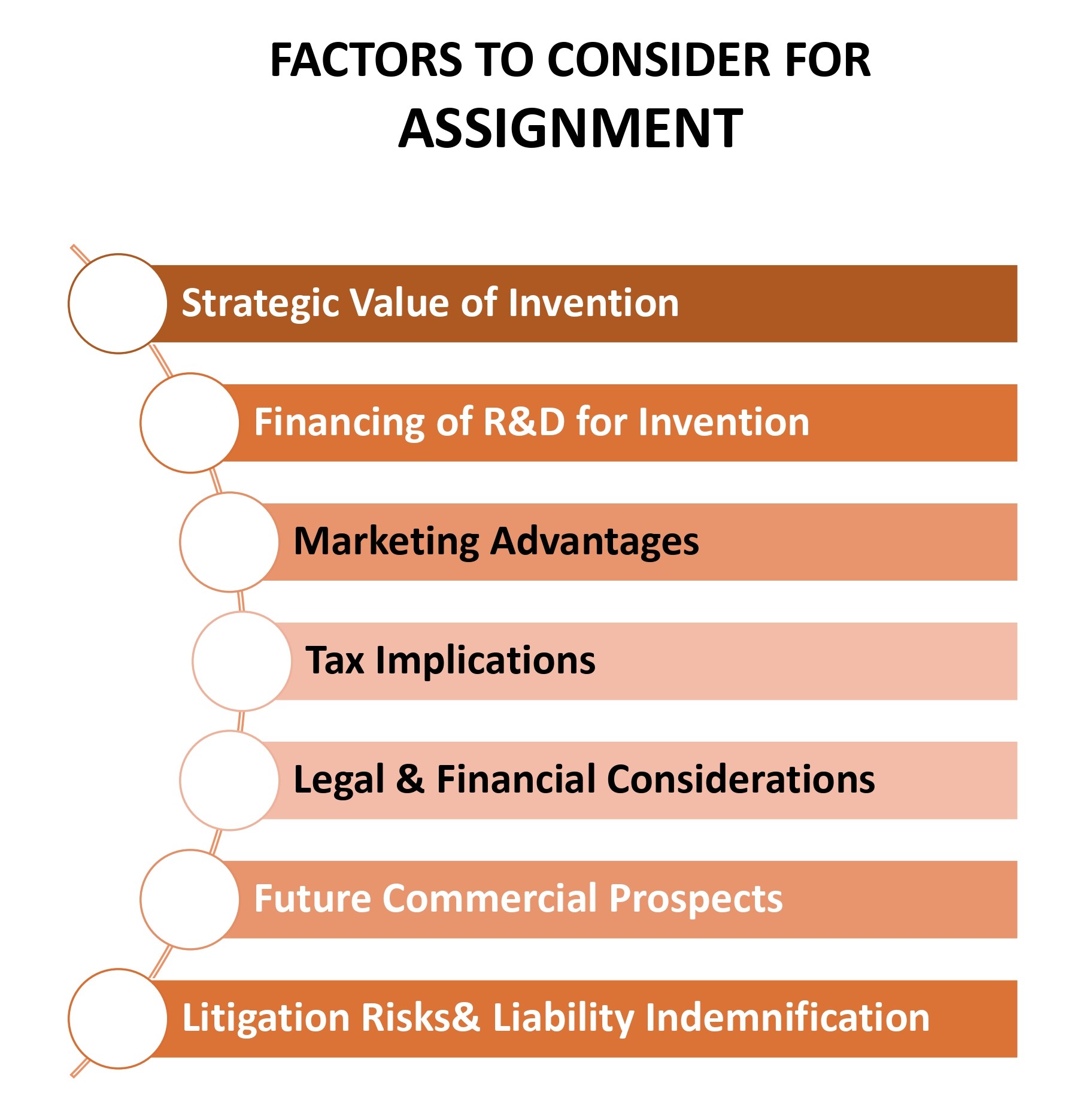
Several factors go into choosing whether an individual or enterprise should own a patent, including:
Often it is advantageous for inventors to assign patents to business entities for protecting personal assets from liability, establishing a corporate veil. Such assignment can shield the individual's personal assets from legal or financial risks associated with the patent and its infringement.
Assignment clauses and contracts also help startups and enterprises retain control over innovations created by promoters, employees or collaborators. This avoids potential disputes and strengthens the company’s portfolio when seeking investors or licensing opportunities.
At Blaze Ventures, we have qualified professionals and elaborate processes for giving strategic advice to inventors and enterprises on the assignment of patent rights of their ideas, inventions and innovations.