Adequate disclosure is a fundamental principle of the patent system, serving as the cornerstone for the exchange between inventors and the public. In return for a time-limited monopoly over their invention, inventors are required to fully and clearly describe the invention and disclose all technical details thereof in a patent application.
The public disclosure has to be in such detail that a person skilled in the relevant field can perform or replicate the invention, including the best method known to the applicant for doing so, without undue experimentation. Thus, the disclosure ensures that the invention can be publicly used after its validity expires. Once the invention enters the public domain, others can replicate, improve and innovate based on the disclosed knowledge.
The concept of adequate disclosure is entrenched in the quid pro quo principle of patent law. In exchange for the grant of exclusive rights to the inventor(s) over the invention for a limited time, the technical knowledge pertaining thereto must be comprehensively disclosed.
The adequacy of public disclosure fosters innovation by making the details of invention available for others to learn from. Further, it contributes to the collective pool of technical knowledge. The complete disclosure also serves as a fillip for others to conceive and effect other novel inventions in the field, but without infringing on the claims of the earlier patented invention.
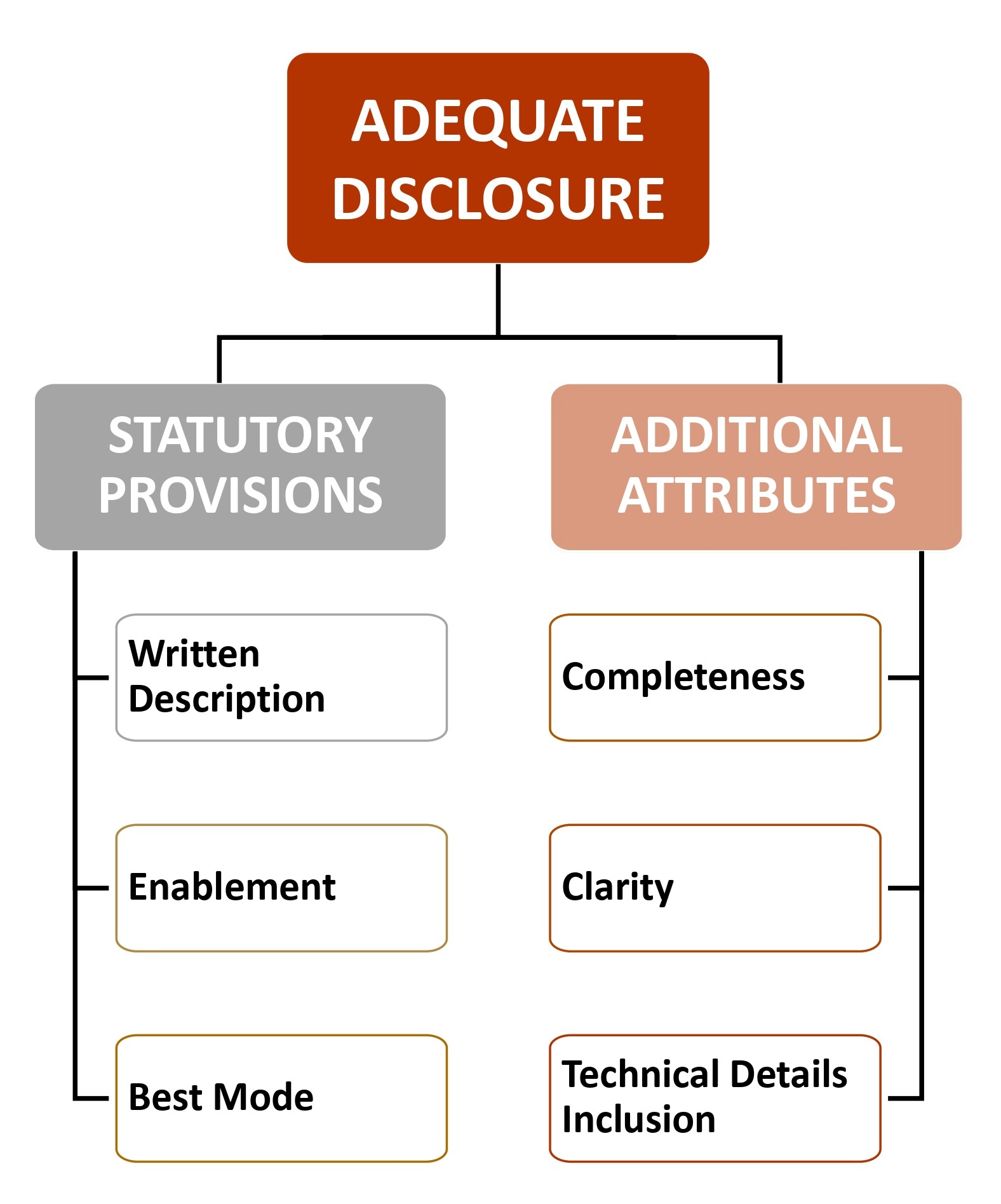
In the United States, the requirement of adequate disclosure is governed by statutory provisions, which outline the following constituents:
In addition to these statutory components, adequate disclosure includes qualities, such as, completeness, clarity and inclusion of technical details. The application must entirely (not partly) cover the subject matter of the claims. It must not only be clear and concise, but also avoid ambiguity and vagueness.
The application must further provide necessary technical information such as drawings, examples, biological materials, etc., as may be applicable, in order to fully explain the invention. Thus, each element of “adequate disclosure” plays a distinct role in ensuring that the patent system operates fairly and effectively.
While the core idea of adequate disclosure is consistent across jurisdictions, the exact requirements do vary; so too the specific phraseology. For instance, under the European Patent Convention (EPC),disclosures must be “sufficiently clear and complete,” which reflects similar principles with different wording.
In conclusion, adequate disclosure is not just a legal formality; it is vital to the function and fairness of the patent system. It stimulates innovation, enables others to design around existing patents, and prevents duplication of effort. Thus, the concept helps fulfil the true purposes of patenting…of promoting scientific and technological progress; developing useful arts; and, ultimately returning back benefits thereof to society.
At BLAZEVENTURES, we have elaborate processes and qualified professionals for helping inventors and enterprises comply with “adequate disclosure” norms in their patent applications.