Public disclosure plays a cardinal role in the patent system, particularly during the prior-art search process. It refers to any non-confidential communication or publication of an invention that makes it accessible to the public before a patent application therefor is filed.
The publication or communication of the invention enables a person with ordinary skill in the art to reproduce it. Such disclosure by anyone—including the inventor— makes the invention part of the public domain, potentially serving as prior art that can bar patentability in several jurisdictions, which adhere to the "absolute novelty" standard.
The review of disclosures in the public domain is vital for ascertaining whether an invention is novel and non-obvious—two core requirements for patentability. This entails reviewing not only existing patents and patent applications, but also non-patent literature and other public disclosures and documents in "prior art."
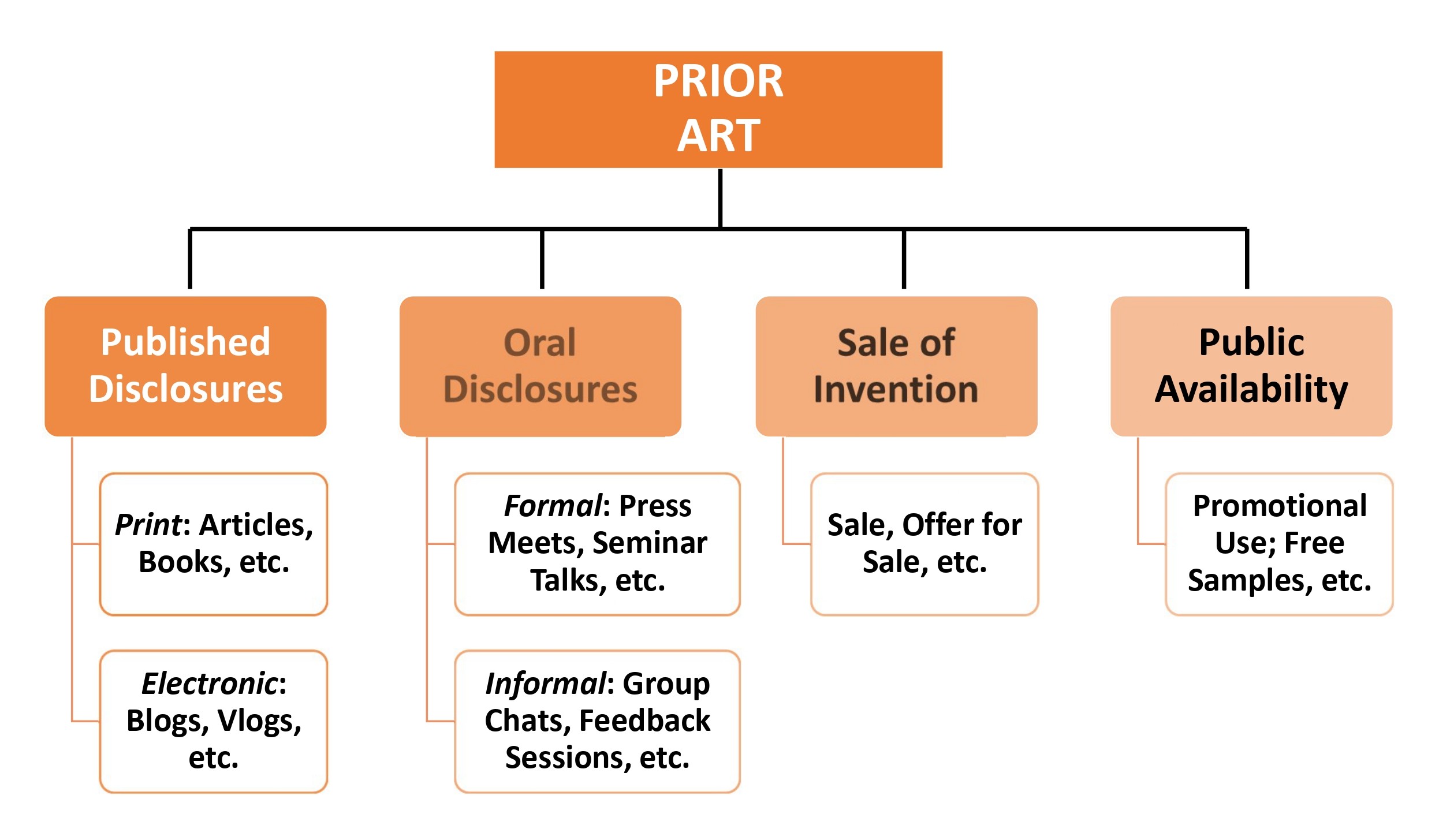
Prior art refers to any existing information or prior knowledge related to the invention. It is comprised of and encompasses several evidentiary actions and artefacts, such as:
Prior art embraces a wide spectrum of disclosures. Further, under the Leahy-Smith America Invents Act (2013), which significantly reformed the US patent system and expanded the scope beyond traditional definitions, any publicly available invention—regardless of method or medium—may be treated as “publicly disclosed”.
Yet, disclosures made underwritten agreements, for testing, evaluation, research or other such defined purposes, do not fall under the ambit of ‘public disclosure’. Nonetheless, inventors must take all precautions to avoid unintended public disclosure before filing a patent application. In fact, even informal, indirect or accidental disclosure can affect patentability of the invention.
Thus, public disclosure can either help or hinder the IP protection process. While it helps in assessing“ extant knowhow and knowledge” during prior-art or landscape search, premature disclosure prior to filing for patent grant can adversely impact patentability of the invention.
At Blaze Ventures, we have qualified professionals and elaborate processes for review of prior art in order to verify and validate patentability of ideas, innovations and inventions.