Inventors often try to figure out if their ideas can be patent protected.
The issue is complex enough to exclude a straight-forward ‘yes or no’ answer. Nevertheless, the landmark decision of the US Supreme Court in Gottschalk v. Benson, 409 U.S. 63 (1972) throws some light, in general, on the patentability of ideas, and in particular, on the patentability of mathematical algorithms and computer-implemented inventions.
The respondents, namely, Gary Benson and Arthur Tabbot, sought a patent for a method of converting binary-coded decimal (BCD) numerals into pure binary numerals for use in general-purpose digital computers.

The claimed invention essentially was a method comprising a sequence of mathematical calculations. The procedures set forth were a generalized formulation for programs to solve the mathematical problem of converting one form of numerical representation to another.
Importantly, the claims were not restricted to any particular computer, apparatus, technology, or end use; they purported to cover the method whenever implemented on a general-purpose digital computer of any type.
The US Patent Office rejected the patent application, but the Court of Customs and Patent Appeals reversed the decision, leading the Supreme Court to consider whether the claimed method constituted a patentable “process.”
The quintessential question that the court examined was the patentability of the invented “method” or "process" under the US Patent Act of 1952 (US Code: Title 35). It examined whether software-related inventions constitute patentable processes. The court also looked at whether ‘product’ and ‘process’ claims can be assessed on the same principle from a patentability perspective.
The Supreme Court unanimously reversed the lower court order. It held that the claimed method was not a patentable process because it was primarily an algorithm—a series of mathematical calculations or mental steps. Though the claims were expressed as a process for use with a computer, it was not sufficiently tied to a particular machine or practical application.
The Court relied on several case laws, including, Mackay Co. v. Radio Corp., 306 US 86, 306 US 94; and, Rubber-Tip Pencil Co. v. Howard, 87 US 507, to uphold the longstanding rule that "[a]n idea, of itself, is not patentable.".
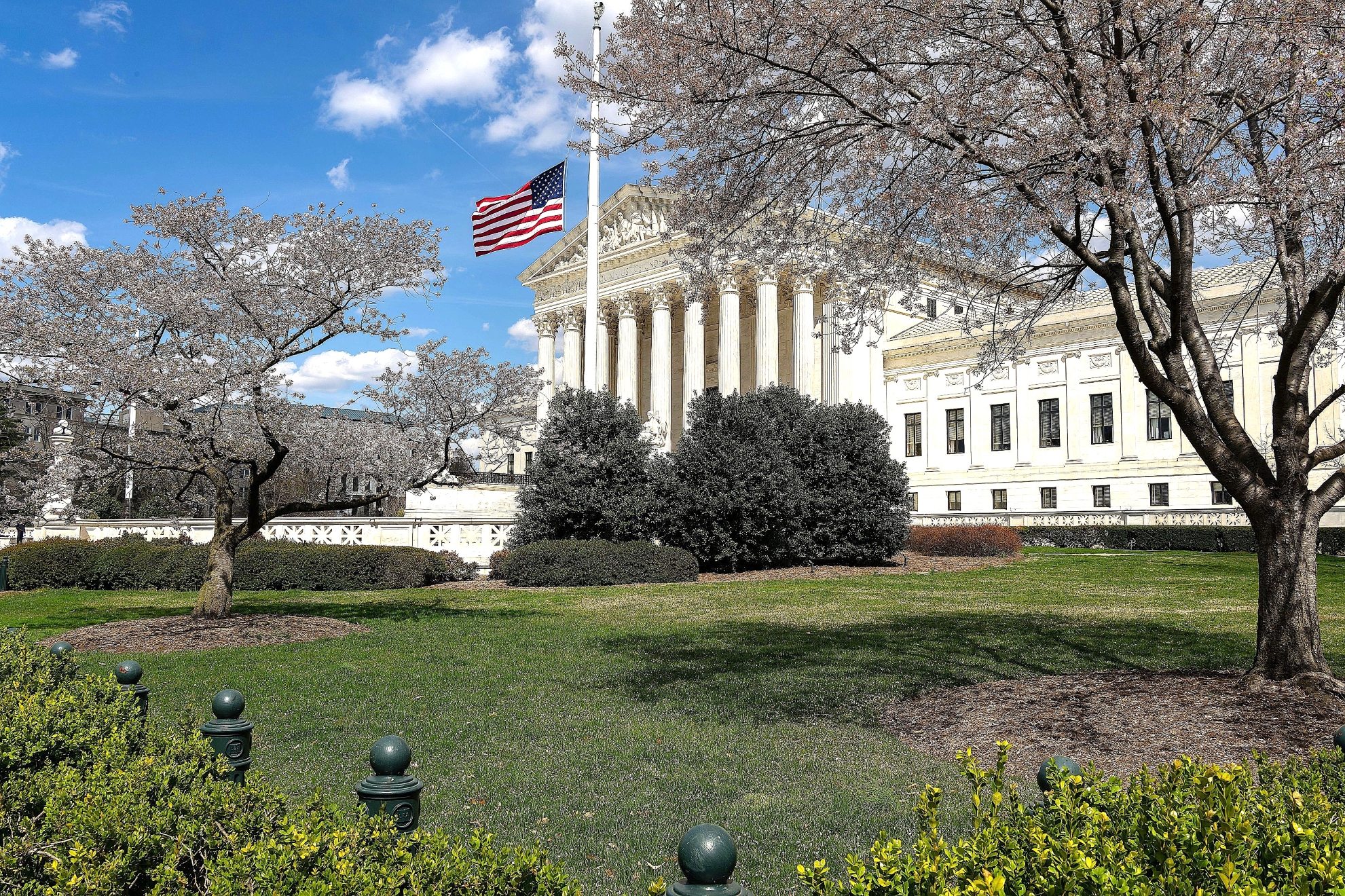
A central concern was pre-emption. The court reasoned that granting the patent would effectively give the patentees control over the algorithm; this would pre-empt substantially all practical uses of the mathematical procedure. It emphasized that mathematical formulae, like laws of nature, were ‘basic tools of scientific and technological work’ and could not be monopolized through the patent system.
Thus, the Court established an important principle: a mathematical algorithm, standing alone, is not patentable merely because it is implemented on a computer. The decision became a foundational precedent for the subsequent development of US software-patent jurisprudence.
It reasoned that a process patent either must be tied to a particular machine or apparatus or must operate to change articles or materials to a "different state or thing." The court also recognized that computer technology was developing rapidly and suggested that broader questions concerning the patentability of computer programs was a policy matter and might require legislative consideration.
The Supreme Court’s decision in this case represents an early and influential articulation of the abstract-idea/algorithm exclusion in US patent law. Yet, the court did not hold that no process patent could ever qualify if it did not meet the requirements of their prior precedents.
At BLAZE VENTURES, we have elaborate processes and qualified professionals to strategically advise parties on the patentability of ideas, inventions and innovations and to help protect IP effectively.