Patentability checks are crucial for innovators and businesses seeking to protect their inventions. These checks help assess whether an idea, invention or innovation is novel, non-obvious, and useful—three core requirements for patentability under most intellectual property laws, such as those of the United States Patent and Trademark Office (USPTO) or the European Patent Office(EPO).
With technological advancements, several tools, databases and techniques have emerged to assist inventors, patent professionals and innovative organizations in conducting thorough patentability searches.
Free patent databases are often the first stop for individuals conducting a preliminary patentability check. For instance, the Patent Full-Text and Image Database (PatFT) and Patent Application Full-Text and Image Database (AppFT) of USPTO; and, Espacenet of European Patent Office provide access to issued patents and published applications in the U.S and worldwide. These databases enable users to search by keywords, inventors, classes, dates, etc. The World Intellectual Property Organization (WIPO) also provides PATENTSCOPE, which covers international patent applications filed under the Patent Cooperation Treaty (PCT).
Patent classification systems like the International Patent Classification (IPC), Cooperative Patent Classification (CPC) and United States Patent Classification (USPC) assist in narrowing down search results. By using the right classification codes for a particular invention, searches can be filtered and refined more effectively to find relevant prior art.
Artificial Intelligence (AI) tools have significantly streamlined patentability searches. Platforms such as The Lens, Google Patents and Semantic Scholar integrate machine learning to provide relevant search results based on context and semantic meaning rather than simple keyword matches. These tools can identify similar prior art and suggest related patents that may get excluded in traditional search methods.
Advanced tools, such as, Derwent Innovation (Clarivate), PatSnap, IFI CLAIMS and Innography offer even deeper insights. They provide powerful landscaping, analytics, citation mapping and competitive intelligence functionalities. They help not only assess novelty, but also evaluate the technological domain and competitive environment.
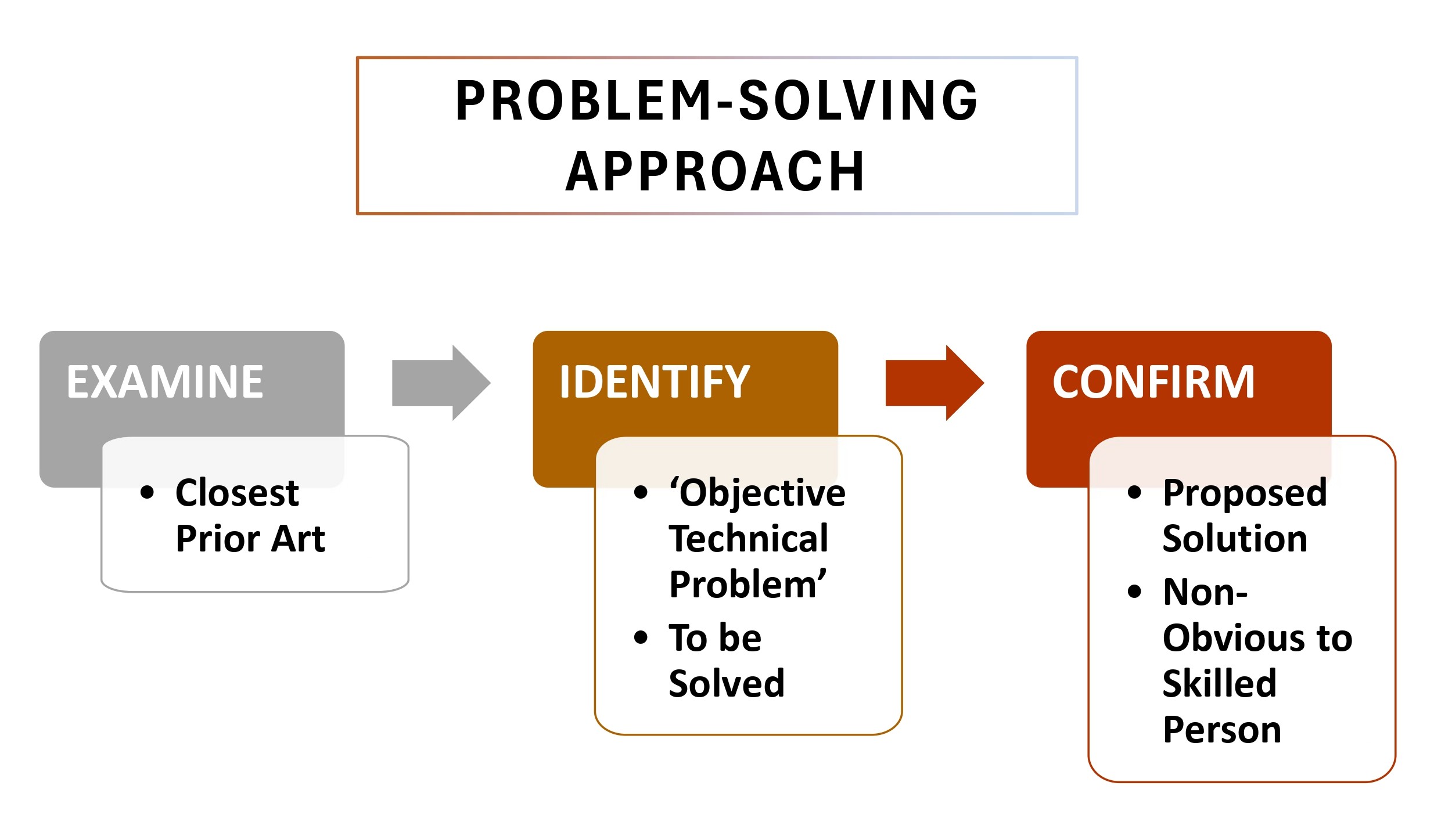
Other techniques, such as, the "Problem-Solution Approach," commonly used in the European Patent Office (EPO), are applied to objectively and predictably ascertain whether an inventive step exists. In this approach, the examiner defines the closest prior art, identifies the objective technical problem to be solved, and then confirms the non-obviousness of the proposed solution to the skilled person.
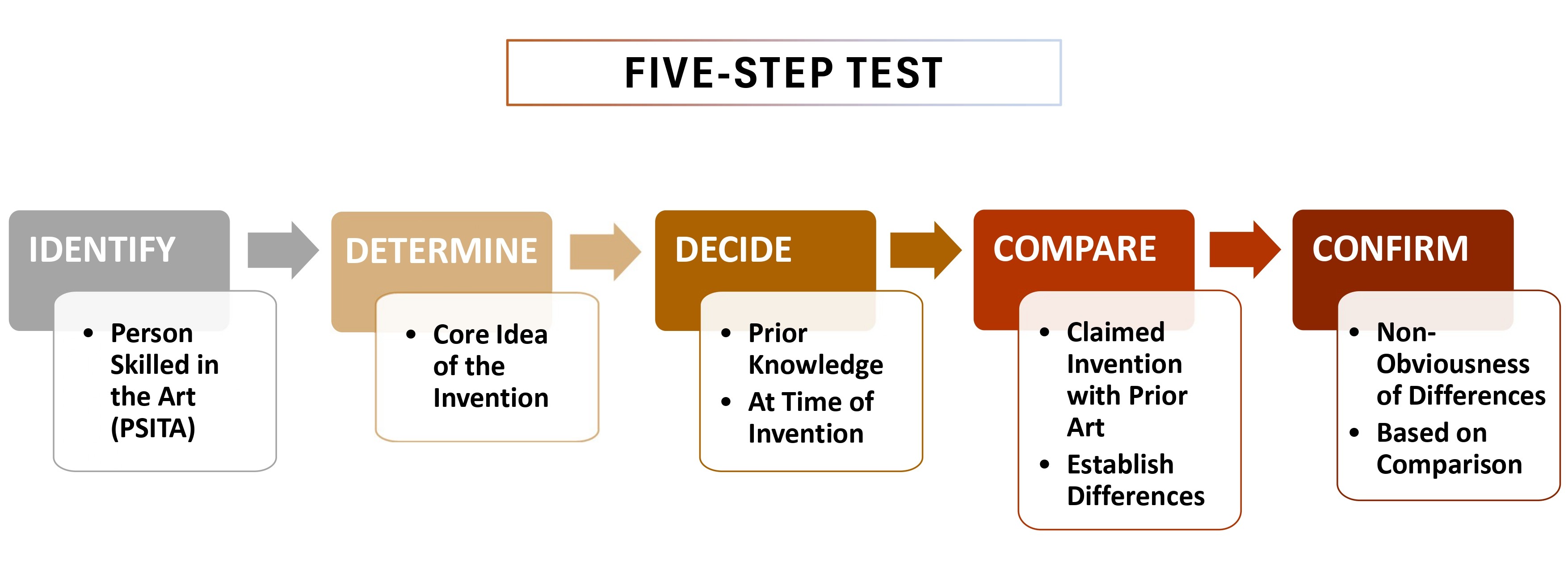
The “Five-Step Test” (or, “Windsurfing Test”) is also a foundational approach available. This test entails: (i) identifying the Person Skilled in the Art (PSITA), who isa hypothetical, skilled, but unimaginative individual with average knowledge in the relevant field; (ii) determining the core idea of the invention; (iii) deciding the prior knowledge at the time of the invention; (iv) comparing the claimed invention with prior art to establish differences; and,(v) confirming the non-obviousness of the differences based on the comparison.
Effort is made in other approaches to determine if there was any “Teaching, Suggestion, Motivation (TSM)” in prior art for modifying references to arrive at the invention. To verify inventiveness, the “Obvious to Try Approach” examines if the invention entails repeated trials of various solutions found in prior art.
Further, a simple “Combination of Prior Art” elements (or, rearrangement thereof) in the invention would imply obviousness. So too, if the invention represents a mere “Workshop Improvement” or “Technical Equivalent” of something that exists.
Patent attorneys and professional patent services firms use their expertise in and knowledge of prior art, patent law, classification systems and search strategies to prepare exhaustive patentability checks.
Public databases and classification systems are valuable resources for basic searches. But, AI-powered and professional tools offer advanced capabilities for more extensive analyses. Often combining multiple approaches can provide the most accurate and thorough assessment of patentability.
At BLAZE VENTURES, we have elaborate processes and qualified professionals for carrying out comprehensive patentability checks, especially for critical, complex, impactful and high-value ideas, inventions and innovations.