When inventors develop a new product, process or technology, they encounter a crucial decision: should they patent their invention or maintain it as a trade secret? The best way to protect an invention, whether through a patent or a trade secret, depends on the specific invention and the business strategy.
Both approaches offer distinct advantages and drawbacks that can significantly impact a business's competitive position.
Patents provide robust legal protection by granting exclusive rights to make, use, and sell an invention for a limited period—typically twenty years. This exclusivity creates a powerful monopoly that prevents competitors from copying the innovation. Once patent is granted it provides a legal basis for taking action against infringers.
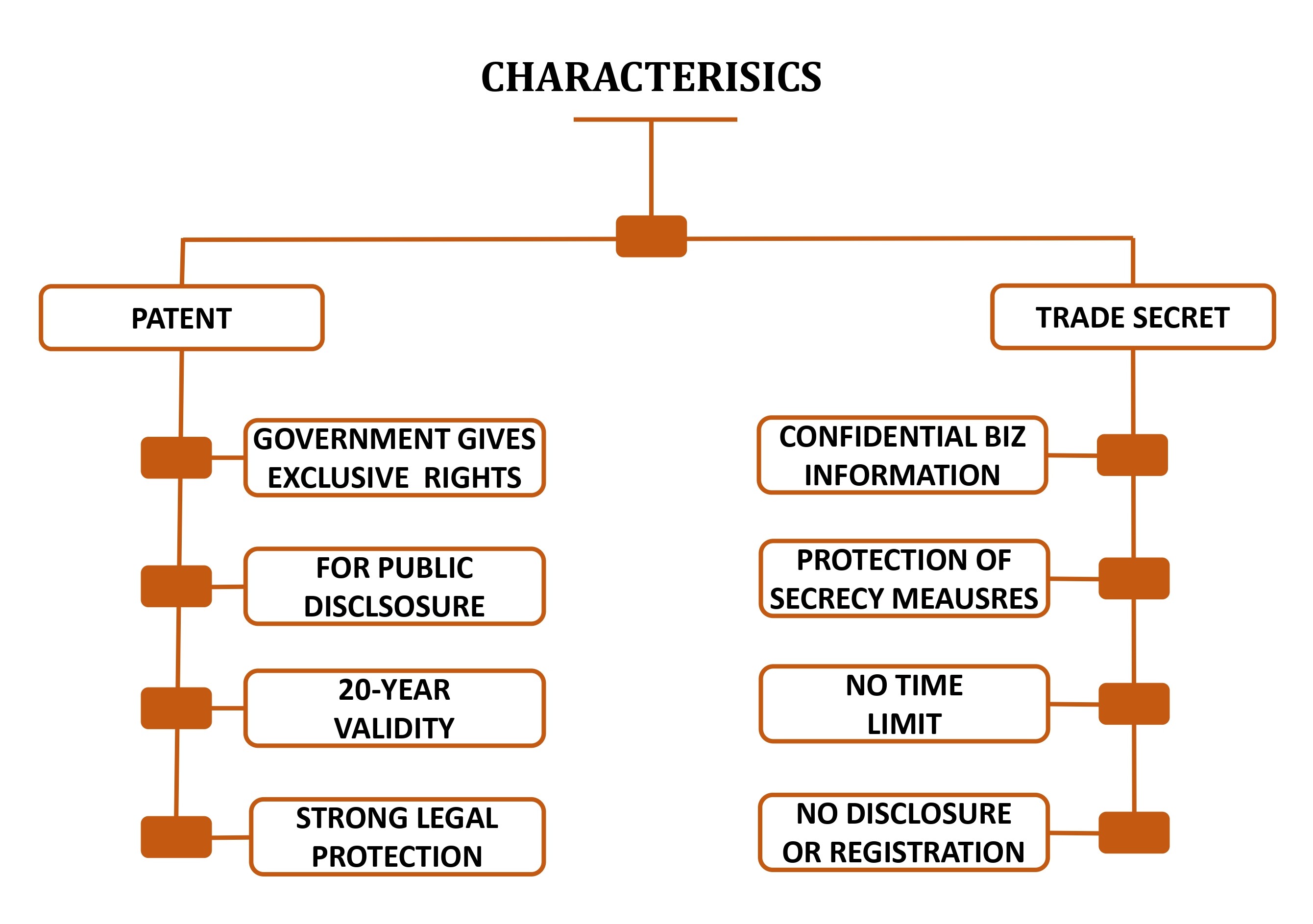
Patents offer many advantages, including public credibility and the potential for attracting investors and partners, who value such documented intellectual property. Additionally, patents can generate revenue through licensing agreements, allowing inventors to profit from their work without direct manufacturing. Also, the public disclosure requirement for the grant of patents spawns scientific progress.
On the downside, patents require full public disclosure, which enables competitors to gain insights on the design, knowhow and technical workings of the invention. This introduces risks of competitors improving the design and knowhow of the invention. Others may even build upon published knowledge even before the patent expires to reverse engineer the invention for enhancing its features, functionalities and performance.
Further, the process of filing and prosecuting a patent application is expensive and time-consuming. Yet, the duration of protection is limited to 20 years. Enforcement of patent rights entails costly litigation too.
Confidential business information that presents a competitive advantage in the marketplace is preferably protected by secrecy measures rather than registration. Trade secrets offer indefinite protection without expiration dates or disclosure norms. Coca-Cola’s formula, protected as a trade secret for over a century, demonstrates amply this option's potential longevity.
Trade secrets do not entail either any filing fees, registration costs or complex application processes. They provide immediate and perpetual protection once the confidentiality measures are implemented.
The primary risks are that trade secrets receive no protection and offer no legal recourse if competitors independently discover, legitimately figure out or ingeniously reverse-engineer the invention. Hence, trade secrets also require significant security measures and can be lost through either employee attrition or corporate espionage. Proving in a court that a competitor acquired details of the invention illegally or fraudulently can be quite an uphill task. Then, there is always the risk of accidentally disclosing the invention in public, which invalidates it.
Generally, patenting is ideal for inventions for which legal monopoly outweighs secrecy risks. It is better suited for innovations that: (a) have high commercial value with clear market demand; and, (b) are easy to reverse-engineer once on the market. This strategy works exceptionally well for processes or formulas that are difficult to reverse-engineer.
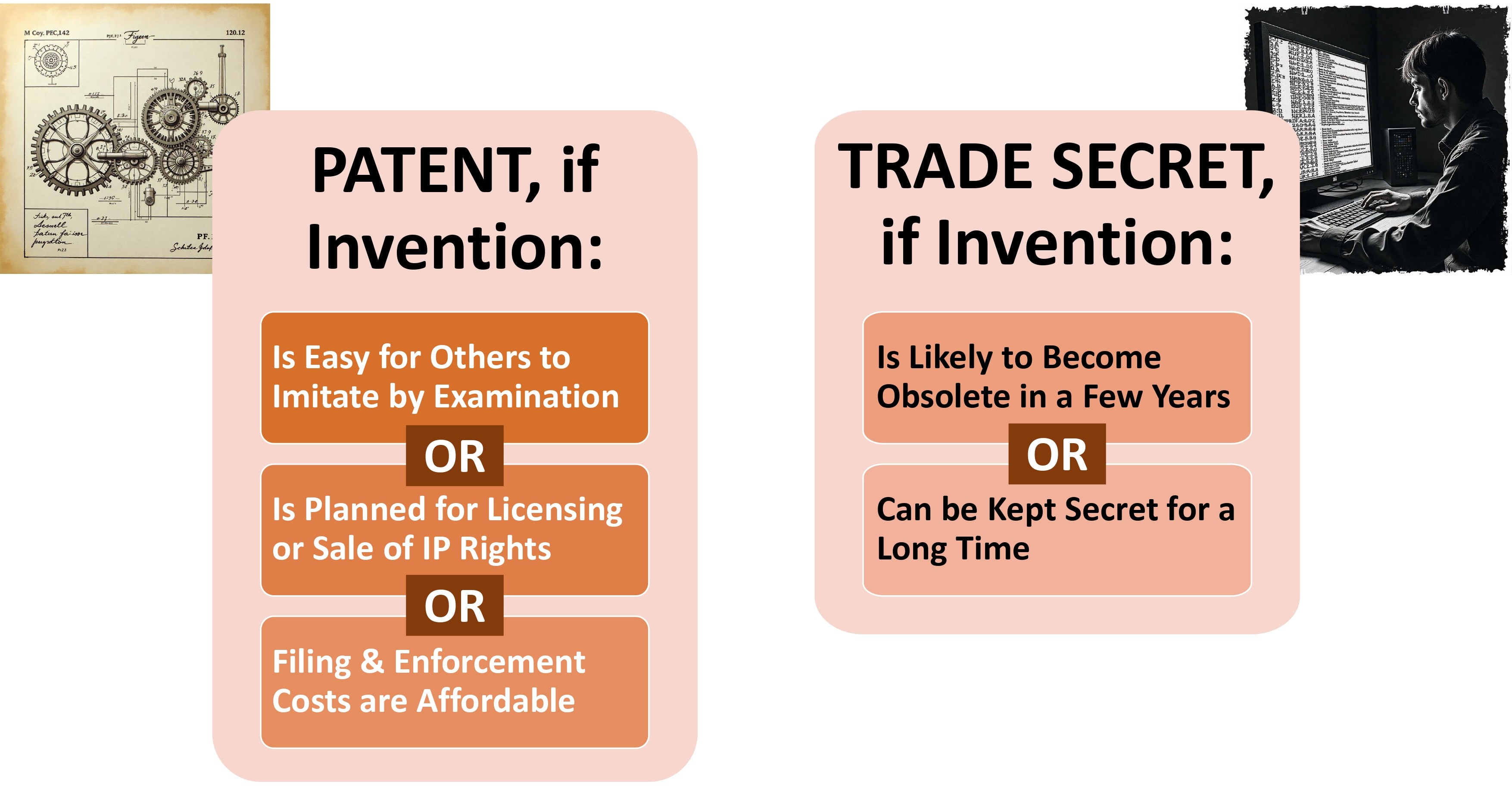
On the contrary, trade secrets are a better strategic fit if it is: (a) not possible to reverse-engineer the invention; and, (b) realistically possible to maintain long-term confidentiality. It is particularly relevant in respect of internal processes, chip layouts, optimization methods, etc.
There’s no one-size-fits-all answer. The optimal choice depends on the nature of invention, financial resources, competitive landscape, corporate goals and business strategy. Many successful companies employ hybrid strategies, patenting some innovations while keeping critical processes confidential.
For high-stakes decisions like this, consulting an intellectual property professional can ensure you protect your innovation in the most effective way.
At BLAZE VENTURES, we have elaborate processes and qualified professionals for advising inventors and enterprises on “effective & optimal protection strategies” for their ideas, innovations, inventions and information.