Novelty is a fundamental aspect in the world of patent law; it is one of the primary criteria that determine whether an invention is patentable or not. The concept of novelty ensures that patents are only awarded for genuine innovations and technological advancements. Without novelty, the patent system would risk protecting or rewarding trivially incremental and existing, well-known ideas, thereby stifling progress instead of promoting it.
Novelty essentially refers to the newness of an invention. In simple terms, a “new invention” is one that has been “not disclosed to the public”, or, “not anticipated in any published record/document or used before the filing date of the patent application with detailed specifications.” This includes written publications, public use, products on sale, and, even prior patent applications.
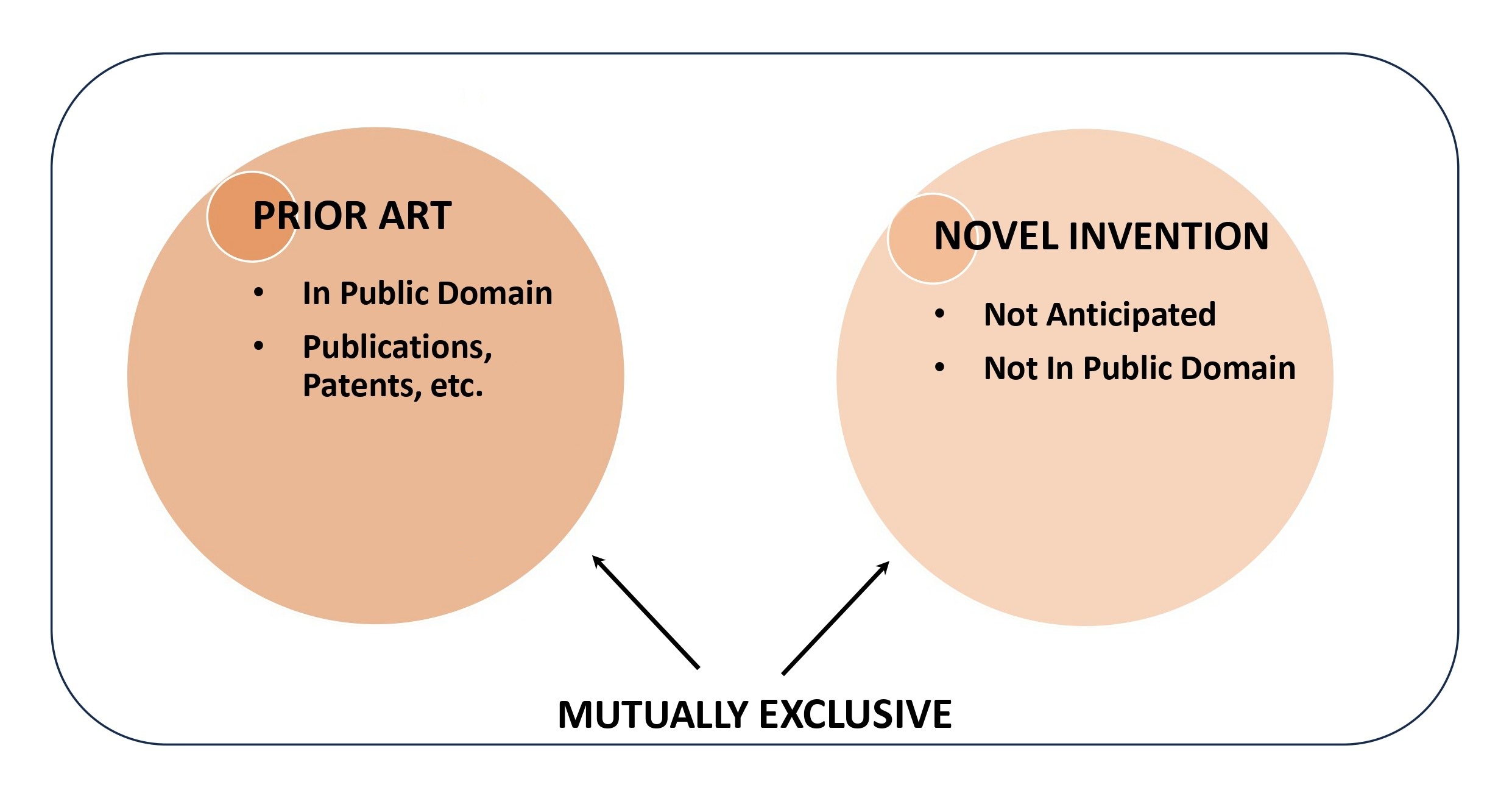
According to patent laws in most jurisdictions—including those in North America; of the European Union; and, under the Patent Cooperation Treaty(PCT)—an invention must be novel to be patentable. This means the invention must not have been publicly disclosed anywhere in the world before the filing date (or priority date) of the patent application. If the invention has been publicly disclosed, even by the inventor, before filing a patent application, it loses its novelty.
Novelty in patenting is vital for maintaining the integrity and effectiveness of the system. It ensures that patents are granted only for truly new inventions. Further, it prevents re-patenting of extant inventions and prior knowledge; and, it encourages timely filing. Further, this strict prerequisite means inventors and applicants must maintain confidentiality until the patent application is filed.
In several jurisdictions, like India, the United States, etc., there is a grace period—typically 12 months—during which an inventor’s own disclosure will not be considered prior art. However, such grace periods are not universal, and in some countries and geographies, any public disclosure before patent filing is fatal to novelty of the invention.
The evaluation of novelty is conducted through a prior art search, wherein patenting professionals search existing patents, scientific literature, and publicly available information to determine whether the claimed invention has been already disclosed. If any single piece of prior art discloses all the features or aspects of the claimed invention, itis deemed “not novel”.
Novelty is distinct from another key patent requirement: inventive step (or, non-obviousness).While novelty asks: “Does this exact invention exist as claimed already?”;non-obviousness seeks: “Even if this invention hasn’t been conceived before, would it be an obvious step to someone skilled in the field?”
Both ‘novelty’ and ‘non-obviousness’ are necessary conditions and must be satisfied for the invention to be patentable. Both conditions are not sufficient though. Inventors must evaluate their creations against the full set of statutory requirements under patent law.
At Blaze Ventures, we have qualified professionals and elaborate processes for evaluating patentability of and ensuring novelty in ideas, innovations and inventions.