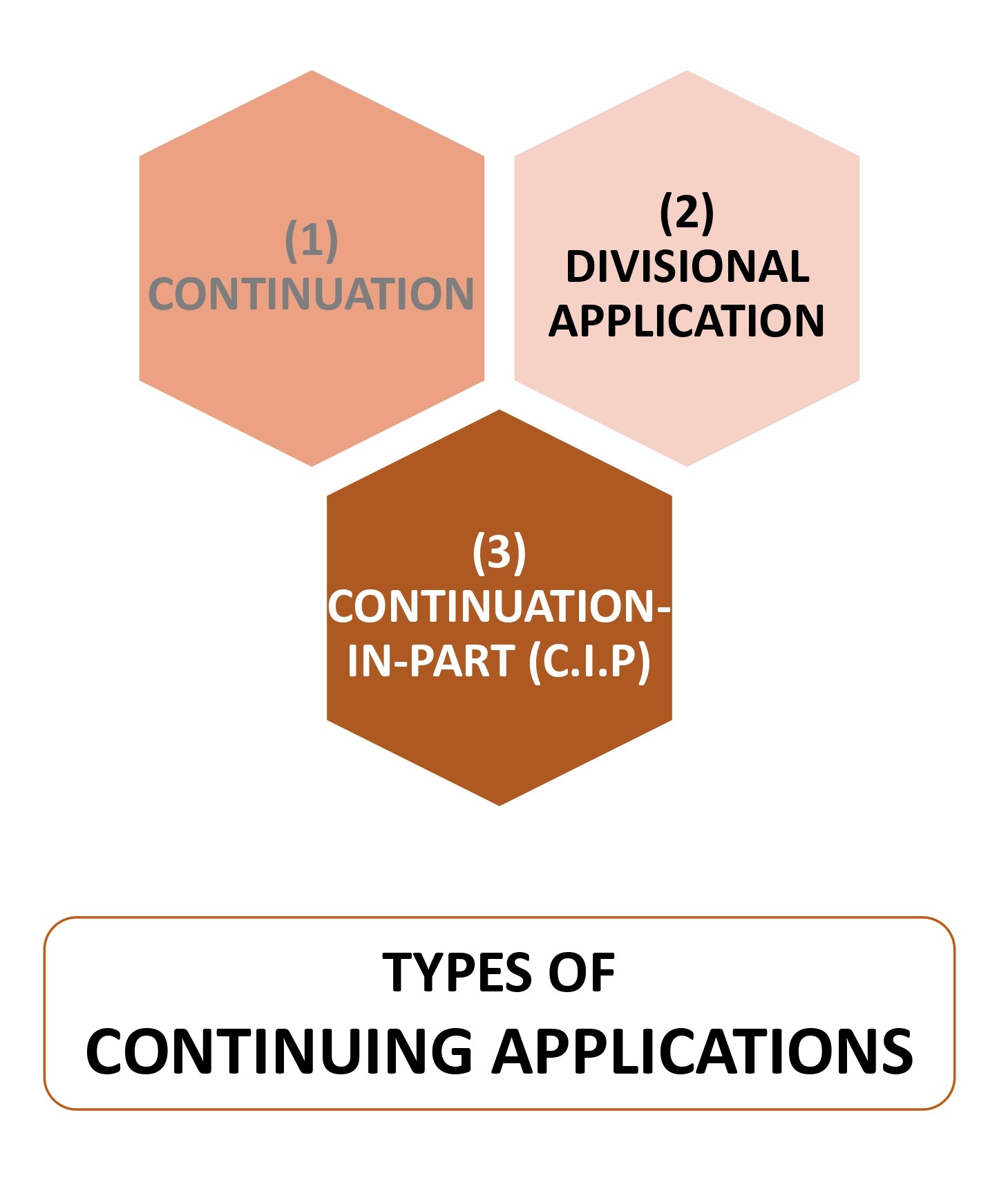
A continuing patent application is a secondary application filed during the pendency of an original ("parent") application. It enables an applicant to pursue new, modified, additional or different claims for the described invention without loss of the original filing date.
Continuing applications play a vital role in patent strategy—they enable inventors and enterprises to not only protect innovations effectively, but also adapt to evolving commercial, competitive and technological circumstances.
Continuing applications serve several strategic goals. They fall into three main categories as follows:
Continuation applications must meet three specific, validity criteria. One, the application must be filed before either grant of a patent against or abandonment of the original application. Further, at least one inventor must be common to both the original application and the continuation application.
Finally, the new, added or modified claims must be completely supported by the written description and drawings provided in the parent application.
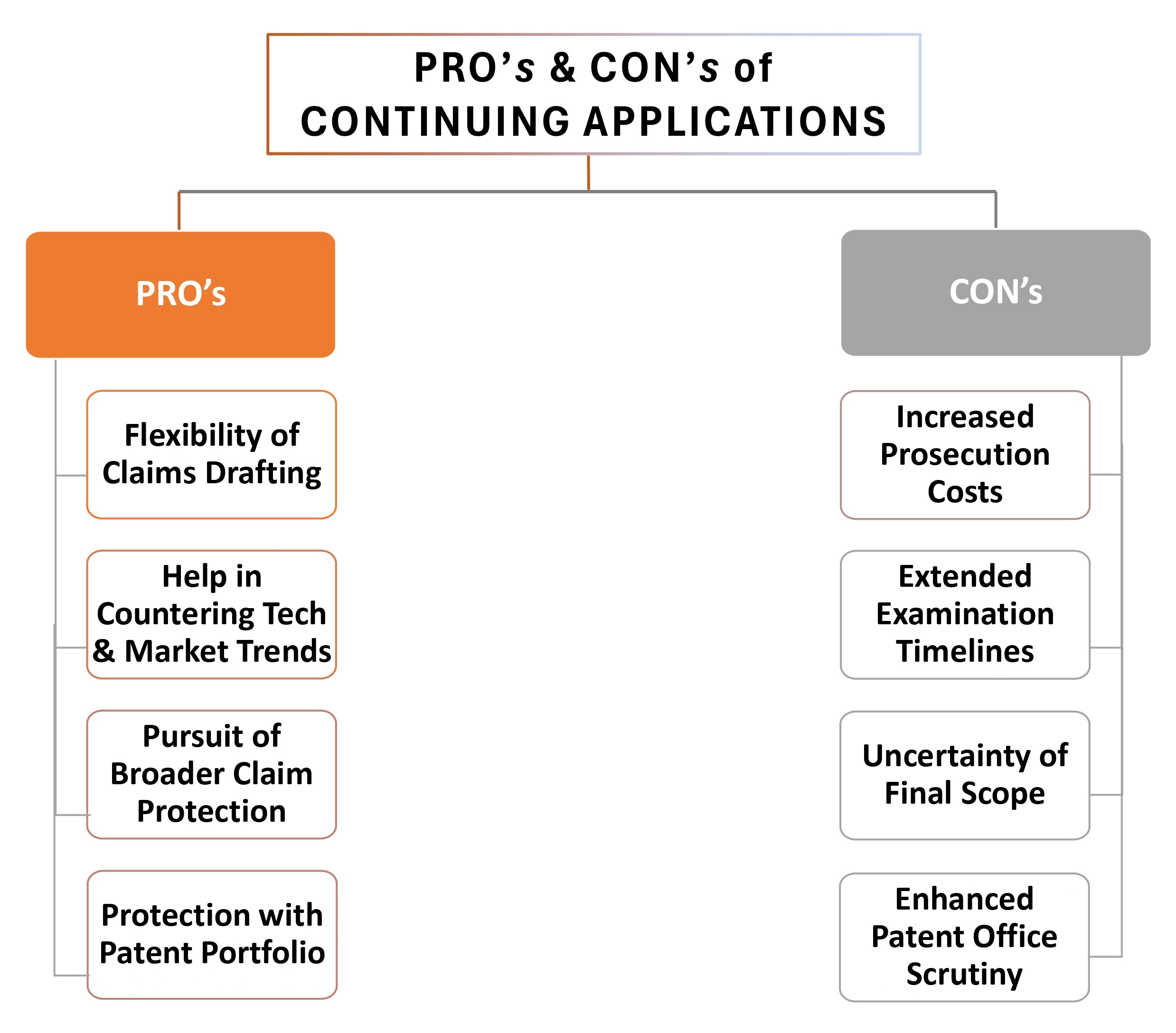
Continuing applications present challenges too. They increase prosecution costs, extend examination timelines, and introduce uncertainty into the final scope of patent protection. Patent offices also scrutinize repeated continuations diligently to ensure that applicants are not unduly delaying patent issuance.
Continuing applications offer many advantages. They accord flexibility to claims drafting, which helps applicants react to technology trends, market developments and competitor products. They also permit applicants to retain a pending application while pursuing different claim strategies, thereby preserving valuable patent rights.
If the patent office restricts the scope of the original claims, a continuation permits the applicant to seek broader protection or different coverage for related inventions. If a competitor releases a new product or announces new functions, continuation helps the patent applicant to draft new claims tailored to encompass the specific design of the competitor’s invention—this is possible only if the continuation falls within the purview of the description in the original, parent application.
Continuation effectively allows the protection of an invention with a portfolio of multiple patents. Thus, it enables applicants to execute stronger, broader defensive and offensive IP strategies.
In conclusion, continuing patent applications are a vital aspect of modern patent systems. They enable the creation of a family of patents from a single disclosure. By enabling applicants to refine, expand, and create new, additional patent claims, they provide valuable flexibility without sacrificing ‘priority date’ rights.
At BLAZE VENTURES, we have elaborate processes and qualified professionals for advising inventors and enterprises strategically on the effective creation, protection and monetisation of IP rights over their ideas, innovations and inventions.