A question that often haunts inventors is: How can one get global protection of intellectual property (IP) rights in patents? This challenge is a critical aspect of the modern innovation ecosystem.
As is well-settled, patents grant inventors exclusive rights for a limited period, typically twenty years, over their inventions in exchange for public disclosure of the details thereof. However, these rights are territorial, that is to say, they only provide protection in countries where patents are granted.
In an inter-connected world, the need for universal protection of patent rights transcending national boundaries has led to the development of international legal frameworks and cooperative mechanisms for the protection of rights.
The adoption of the Agreement on Trade-Related Aspects of Intellectual Property Rights (TRIPS) is a major development that facilitates international IP protection. The TRIPS Agreement, which is administered by the World Trade Organization, details minimum standards for the protection and enforcement of intellectual property rights, including patents, across all member states.
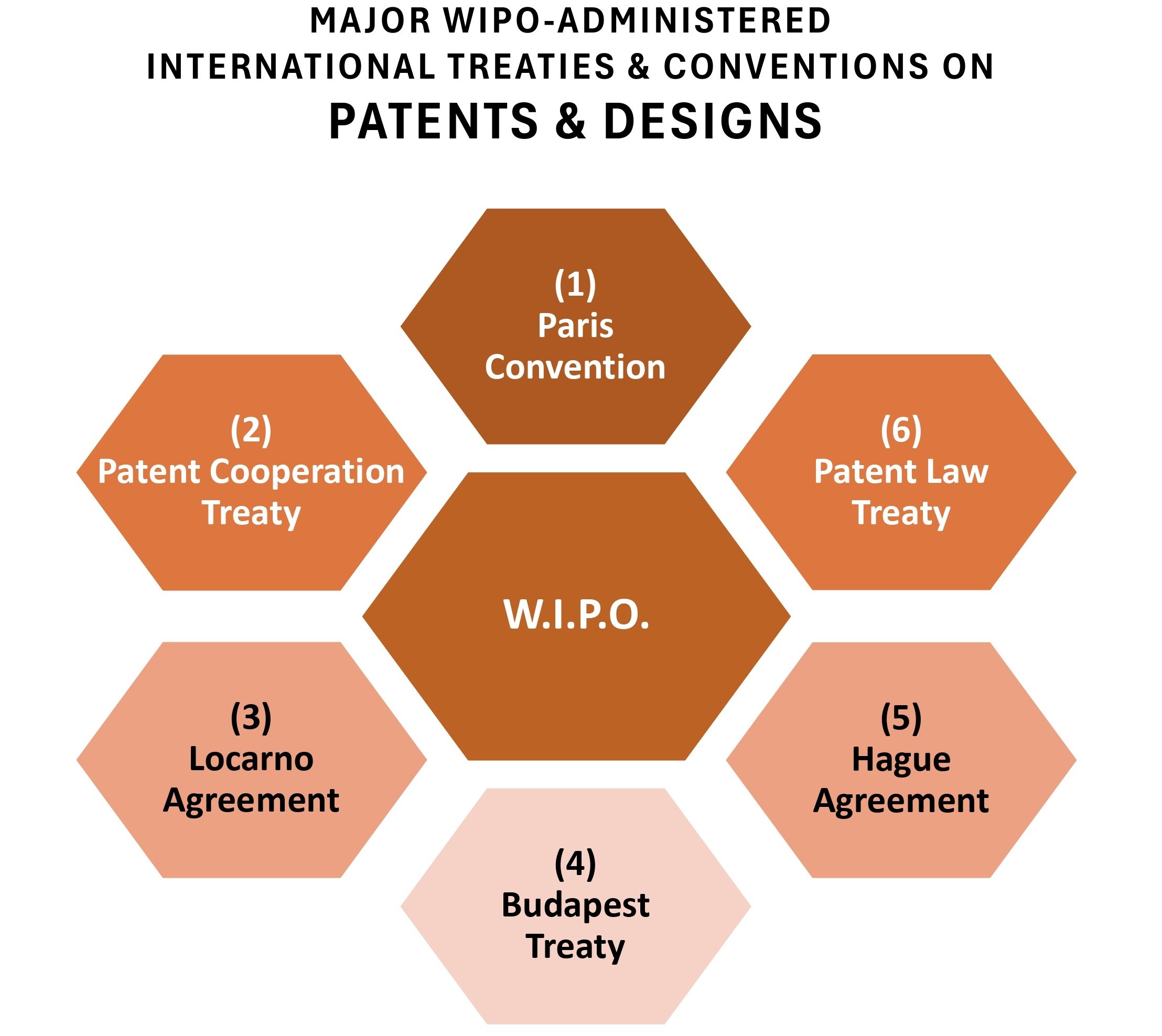
A path-breaking milestone in the endeavor to implement a global regime for protection of patent rights is the establishment of the World Intellectual Property Organization (WIPO), a specialized arm of the United Nations Organisation responsible for the worldwide promotion and protection of IP rights.
WIPO is entrusted with the administration of several key treaties and conventions that facilitate international patent protection. Among these, the Patent Cooperation Treaty (PCT) plays a crucial role.
Protecting an invention globally is best achieved by filing a single international patent application under the Patent Cooperation Treaty (PCT) through the WIPO, which streamlines the process of seeking protection in up to 153 countries.
The PCT enables inventors to file an international patent application, which can thereafter be pursued in multiple member countries. Although the treaty does not grant a “global patent,” it substantially simplifies the process of seeking patent protection in multiple jurisdictions and geographies.
Under the PCT system’s unified procedure, inventors have a time window of about 30-months from the priority date for seeking patent protection in various designated countries and geographies.
Another foundational framework for global protection of patents is the Paris Convention for the Protection of Industrial Property of 1883. This treaty established important principles, such as:
In many geographies, a single application can be filed to cover multiple countries. For instance, a single application can be filed with the EPO to seek patent protection in multiple European countries.
In spite of these international systems, patent protection remains territorial in nature; hence, statutory bodies and competent authorities grant and enforce patents rights at the national or regional level. On top, differences in legal systems, economic priorities, and levels of technological progress can further lead to divergence in patenting regulations and enforcement practices.
Hence, as innovation continues to expand exponentially across borders, effective international cooperation remains vital for fostering innovation, economic growth, and the dissemination of knowledge.
In conclusion, a complex system of cross-border treaties and international institutions seek to harmonize standards for supporting global protection of patent rights without jeopardising national sovereignty of countries.
At BLAZE VENTURES, we have elaborate processes and qualified professionals for helping inventors and enterprises with global protection of IP rights for their ideas, inventions and innovations.