Originality is a lynchpin of patent law and plays a crucial role in determining whether an invention is eligible for patent protection. In the context of patenting, “originality” refers to the requirement that an invention must found to be novel and non-obvious during a prior art search. These two criteria ensure that patents are granted only for truly new and inventive contributions, thereby encouraging innovation and technological advancement.
For an invention to be considered original, it must not have been publicly disclosed, either in writing or orally or through public use, prior to the filing date of the patent application. If any part of the invention has been made available to the public—even by the inventor(s)—prior to filing, it may be considered prior art and could invalidate the claim of originality.
The second critical element of originality is non-obviousness. Even if an invention is new, it must not be an obvious improvement or minor variation of an existing invention to a person skilled in the relevant field. For example, simply changing the color or size of an existing product typically does not meet the threshold for non-obviousness.
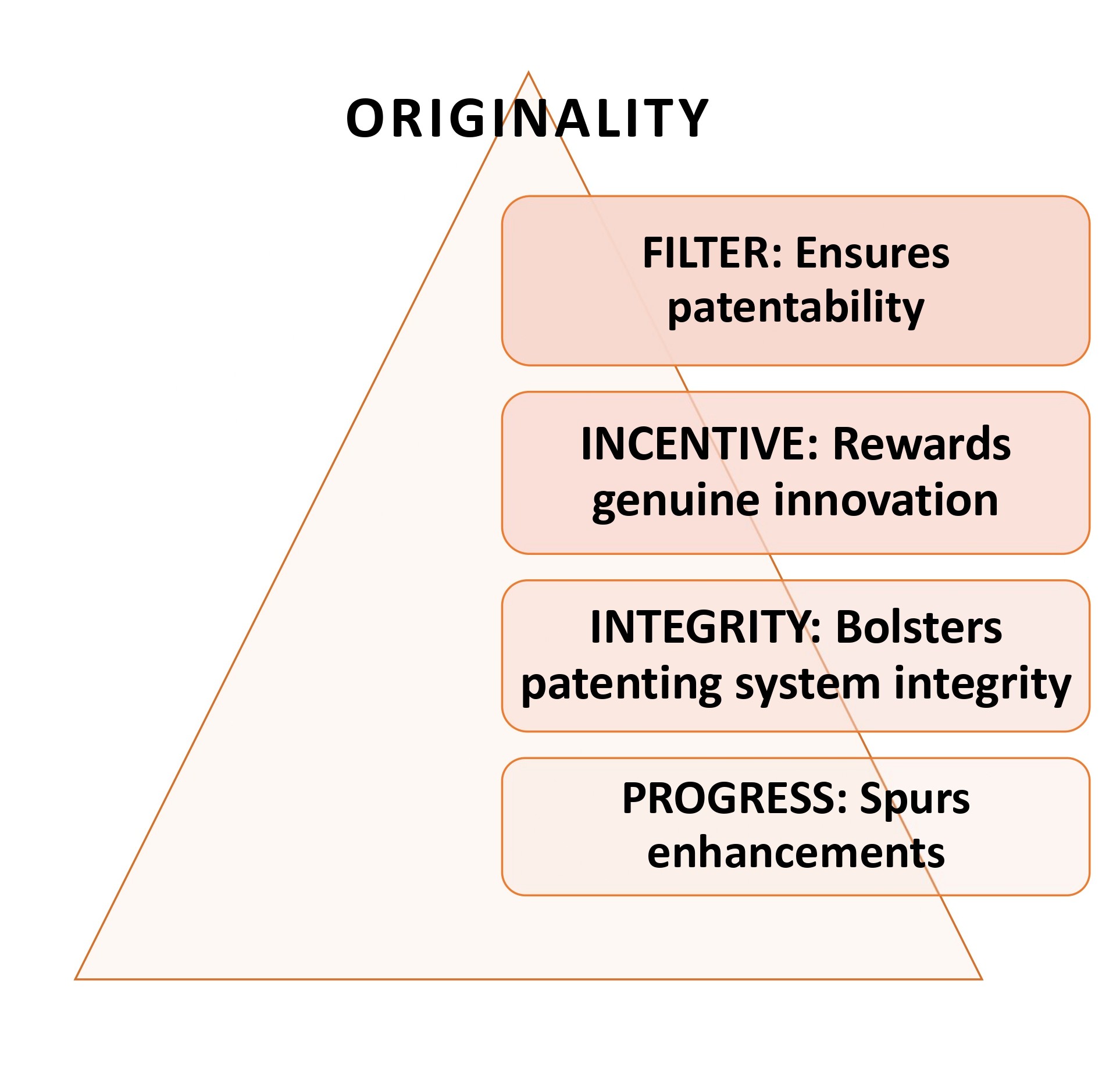
The requirement for originality serves several purposes.
To begin with, it serves as a filter for ensuring that patents are granted only novel and inventive ideas. Then, it incentivizes genuine innovation by rewarding inventors who push the bounds of science and technology. Further, it fortifies integrity of the system by ensuring that patent rights are not granted for inventions that already exist. Finally, the publication and storage of granted patents in searchable databases motivates other inventors into further enhancing patented inventions and fuels further R&D and progress in the field.
Originality must be judged objectively. The grant of a patent will be denied if a similar or the identical invention exists in prior art, regardless of whether the inventor intentionally copied or had prior knowledge about the pre-existing work or not. Every patent office consistently operates on a global standard of novelty, which means that originality can be challenged on the basis public disclosure in any country.
Inventor(s), therefore, must not only investigate thoroughly the existing landscape of the invention’s field and related technologies, but also take care to maintain confidentiality until a patent application is filed therefor.
At BLAZE VENTURES, we have elaborate processes and qualified professionals for assisting innovators and enterprises to verify the existence of originality in their ideas, innovations and inventions.