Utility is a vital aspect of a patent, alongside novelty and non-obviousness. It is essential for ensuring that the patent system protects inventions that are not only novel and inventive (or, non-obvious), but also useful.
The principle of utility underpins the patent system’s broader purpose: to encourage the development and disclosure of innovations that offer real-world benefits. Without utility, the patent system could be exploited to monopolize abstract ideas or theoretical concepts that have no tangible application.
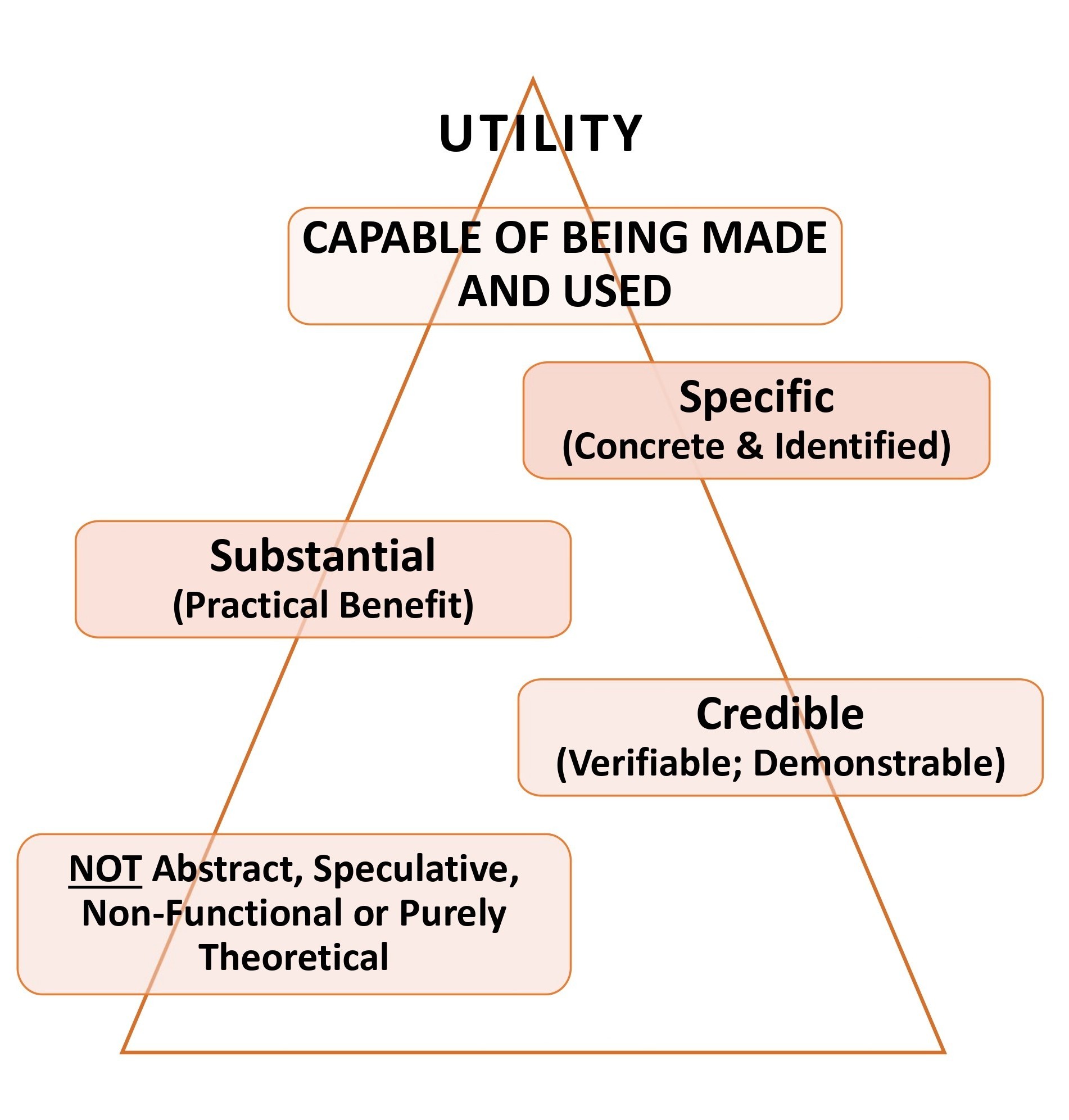
In the context of patent law, utility means that the invention must be capable of performing some identifiable and practical function. In other words, it must have demonstrable value and provide specific benefit(s). It is often referred to as the "usefulness" requirement and it serves to filter out abstract, speculative, non-functional or purely theoretical inventions.
Importantly, utility does not mean that an invention be the best solution to a problem or that it be commercially successful. It simply means that the invention must work as claimed and described. Similarly, utility does not require that the invention be in demand; the mere fact that it has a viable function is sufficient.
Utility plays a critical role in ensuring that inventions are meaningful. A patent application must include a written description that allows persons skilled in the art to understand how to make and use the invention.
If the invention does not actually work as intended, then the pubic disclosure fails in its purpose. This undermines the balance that the law seeks to maintain between public good and private rights.
The utility requirement varies to some degree among jurisdictions. In the United States, under 35 U.S.C. §101, an invention must be “useful,” which implies that it must have a specific, substantial and credible utility. This means that the invention must do something concrete (specific), provide a real-world benefit (substantial), and be believable to someone skilled in the art (credible). Hence, inventions can be patented only if a specific utilitarian value is identified and demonstrable.
While usefulness is a pre-requisite in the United States, the lack of usefulness or utilitarian value is sufficient ground for revocation in countries, such as, India. In Europe, the criterion is framed slightly differently. The European Patent Convention (EPC) requires that an invention be “susceptible of industrial application,” meaning it must be capable of being made or used in some kind of industry. However, purely aesthetic inventions are excluded under European patent laws.
Thus, the utility requirement upholds the foundational principle that patent protection should serve public interest by offering value to users and contributing to society. For inventors, proving utility is not typically the most difficult hurdle, but it remains a vital step in securing meaningful and enforceable patent protection.
At BLAZE VENTURES, we have elaborate processes and qualified professionals for assisting innovators and enterprises to verify and ratify functional usefulness of their ideas, innovations and inventions.